Mechanical engineering · Agriculture · Manufactured
Branch & Firewood Woodchipper — 50mm-Capable Shredder
Client
Confidential — Forestry & Agriculture
Duration
8 weeks
Year
2023
Designed and built an efficient branch and firewood shredder for material up to 50mm in diameter, with a frame and feed geometry tuned for sustained throughput on real-world stock — wet branches, knots, irregular feed — rather than catalog peak. Manufactured and in service.
Engagement Metrics
50 mm
Max stock diameter
Sustained, not peak
Throughput target
Manufactured & in service
Status
Build package + unit
Deliverable
From the project
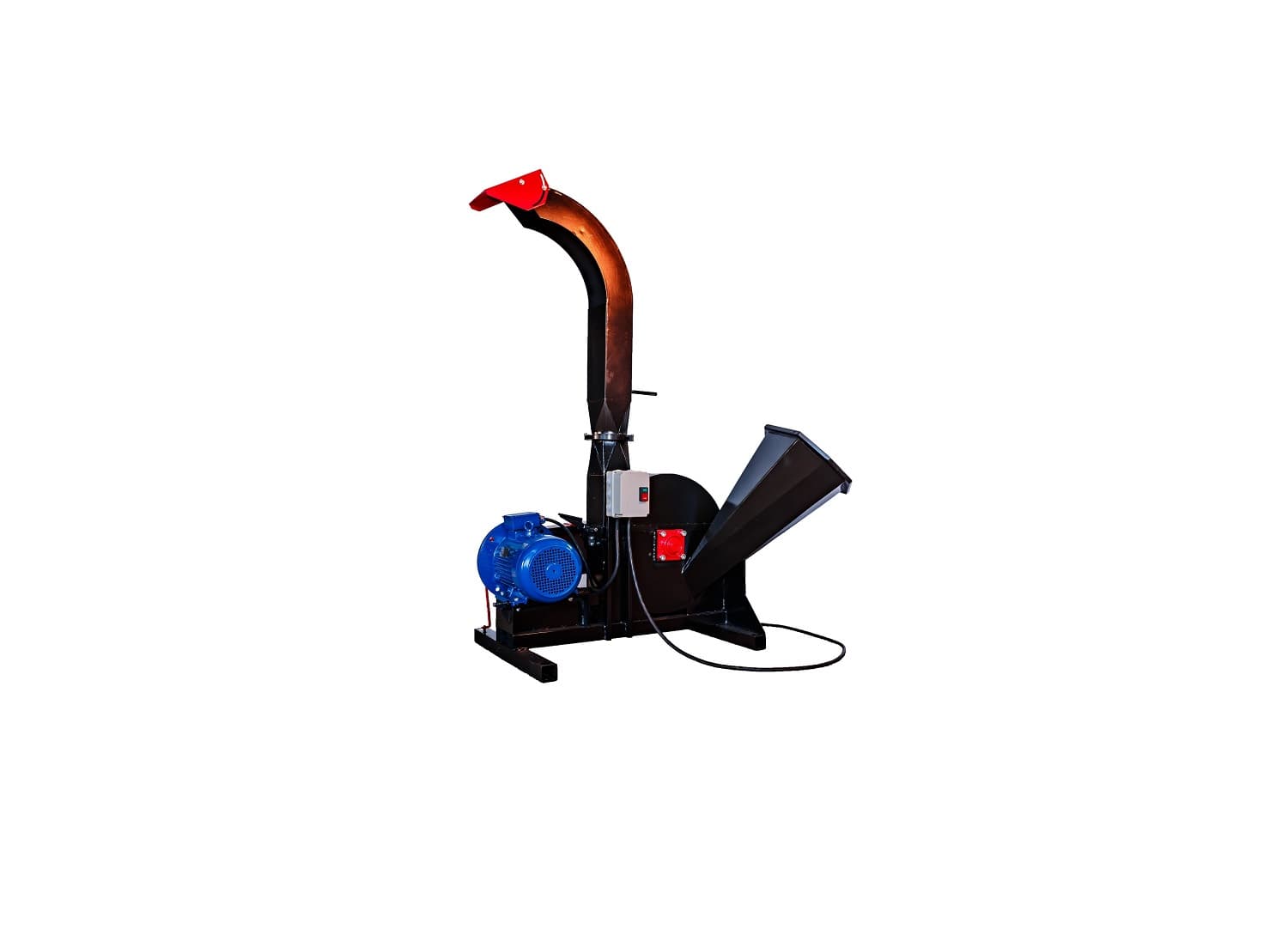
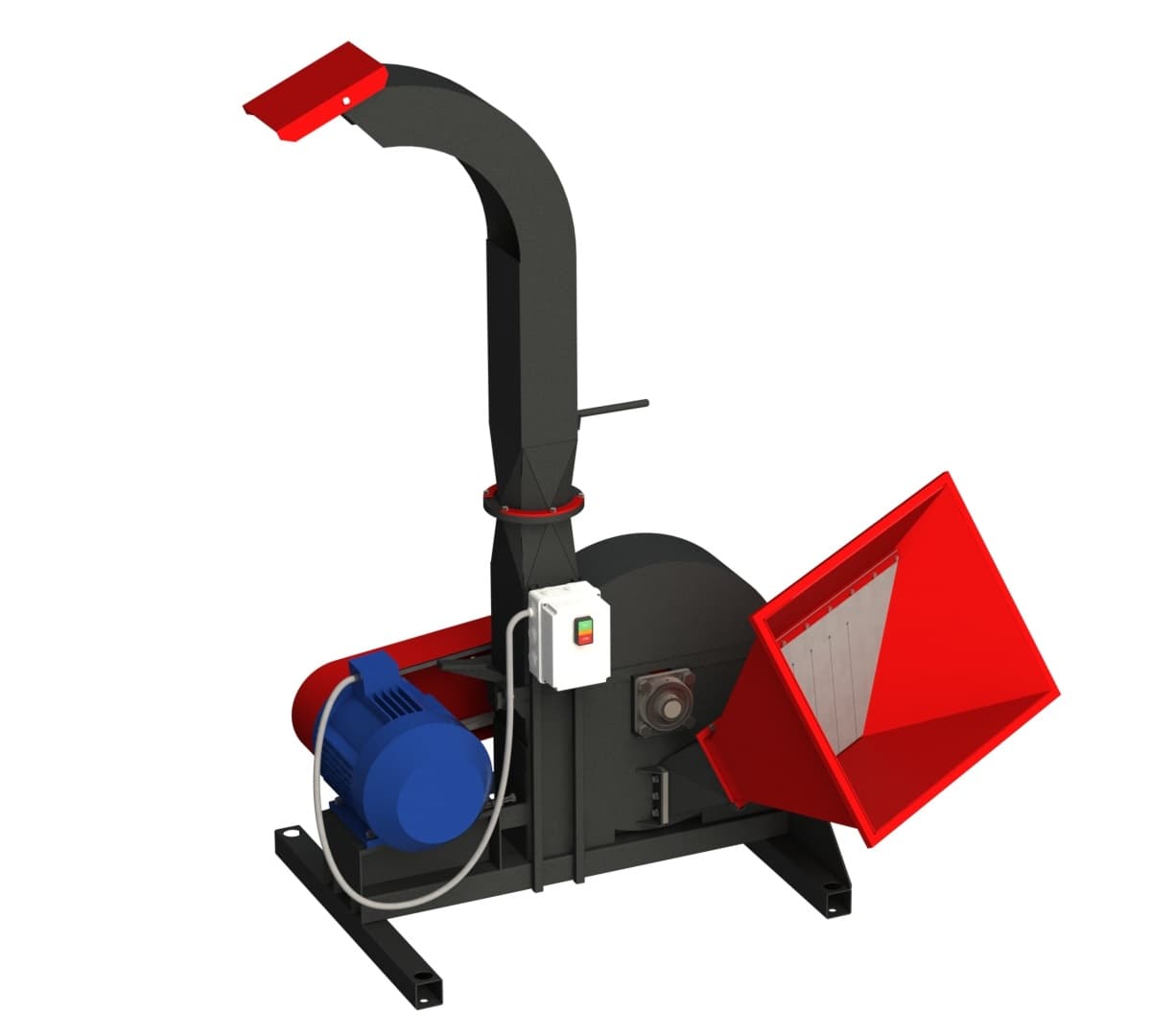
2 imagesFinished unit — manufactured to the engineering package and in service. CAD reference — rotor, blade geometry, and feed throat specified for sustained throughput.
The Challenge
Catalog woodchipper specs report peak diameter on freshly-cut clean stock. In actual use — wet branches, knots, irregular feed, intermittent loading — that peak number is rarely sustained. A spec sheet that says "50mm" tells the buyer what the machine can do on the demo bench, not what it will do behind a tractor at the end of a long day.
Why catalog peak misleads buyers
The spec is collected on a single feed of clean, straight, dry stock. Real branches are none of those things:
- They're wet. Wet wood has different shear behavior than dry wood.
- They're knotty. A knot is a localized hardness spike that catalog tests don't represent.
- They're irregular. The feed throat sees branches at every angle, not perpendicular.
- They don't arrive on a conveyor. Operators feed by hand or by grapple, with variable spacing.
The client's previous machine rated at 50mm caught up on every one of these issues. The brief was to specify a 50mm rating that held *in the field*, not on a press release.
Our Approach
We sized the rotor, blade geometry, and feed throat for the worst-case feed profile rather than the catalog ideal. Material choices and bearing arrangement were specified for sustained operation rather than burst load. Build documentation, BOM, and assembly drawings were delivered as a manufacturing package — not a concept render.
Design choices that target sustained throughput
- *Rotor inertia.* Sized so localized hardness spikes (knots, dense heartwood) don't stall feed.
- *Blade geometry.* Edge angle and clearance tuned for wet, irregular stock — not for the catalog demo case.
- *Feed throat.* Geometry that accepts branches at off-perpendicular angles without binding.
- *Frame and bearings.* Rated for continuous duty, not for the burst-cycle profile most catalog specs assume.
- *Service access.* Blade replacement and feed-roller maintenance designed for field conditions, not a workshop.
What got delivered
A complete manufacturing package: 3D CAD model, mechanical drawings, BOM, hardware list, fabrication notes, and assembly drawings. The unit was then built to the package.
Results
The unit was manufactured and put into service. It handles branches and firewood up to 50mm in diameter under realistic feed conditions — wet, irregular, knot-bearing — and sustains throughput across continuous use.
What changed for the operator
- The 50mm rating is real, not aspirational. Operators don't have to triage stock before feeding.
- Service intervals match field operation, not workshop ideals.
- Blade replacement is a field-friendly procedure, not a shop-only one.
What "sustained" means in practice
On a catalog demo, a woodchipper rated for 50mm is fed straight, clean, dry stock at a steady cadence by an operator standing in front of it. That's a sequence the machine sees rarely outside trade shows.
In the field, the same machine sees branches with knots that arrive at varying angles, wet stock that grips the blades differently than dry stock, periods of heavy feed followed by gaps, and forks that approach the throat sideways. "Sustained" means the machine handles that mix without operator triage, without thermal soak-out, and without service intervals that interrupt the work day.
Browse the portfolio
Filter by industry or service.
Next case studyScrew-Type Woodcutter — Conical-Screw Splitter Prototype
Industrial & Manufacturing
Related Engagements
- Industrial & Manufacturing
Press Molds for Semi-Dry Pressing — Facing-Product Family at 300 kg/cm²
Read - Industrial & Manufacturing
Heat & Humidity Curing Chamber — 8-Hour Strength Cycle with Heat Recovery
Read - Industrial & Manufacturing
Mechanical Engineering Workshop — 600 m² Tooling Production Build-Out
Read