Industrial engineering · Workshop design · End-to-end
Mechanical Engineering Workshop — 600 m² Tooling Production Build-Out
Client
Confidential — Building Materials
Duration
Multi-stage program
Year
2016
A complete mechanical engineering workshop designed, specified, and established — 600 m² of full-cycle steel processing capacity dedicated to producing tooling for a facing-brick and -tile semi-dry-pressing line. Owned from process design through layout, equipment selection, infrastructure spec, and staffing structure.
Engagement Metrics
600 m²
Workshop area
Full-cycle steel
Process scope
Press tooling
Output
Tech → layout → staffing
Scope delivered
From the project
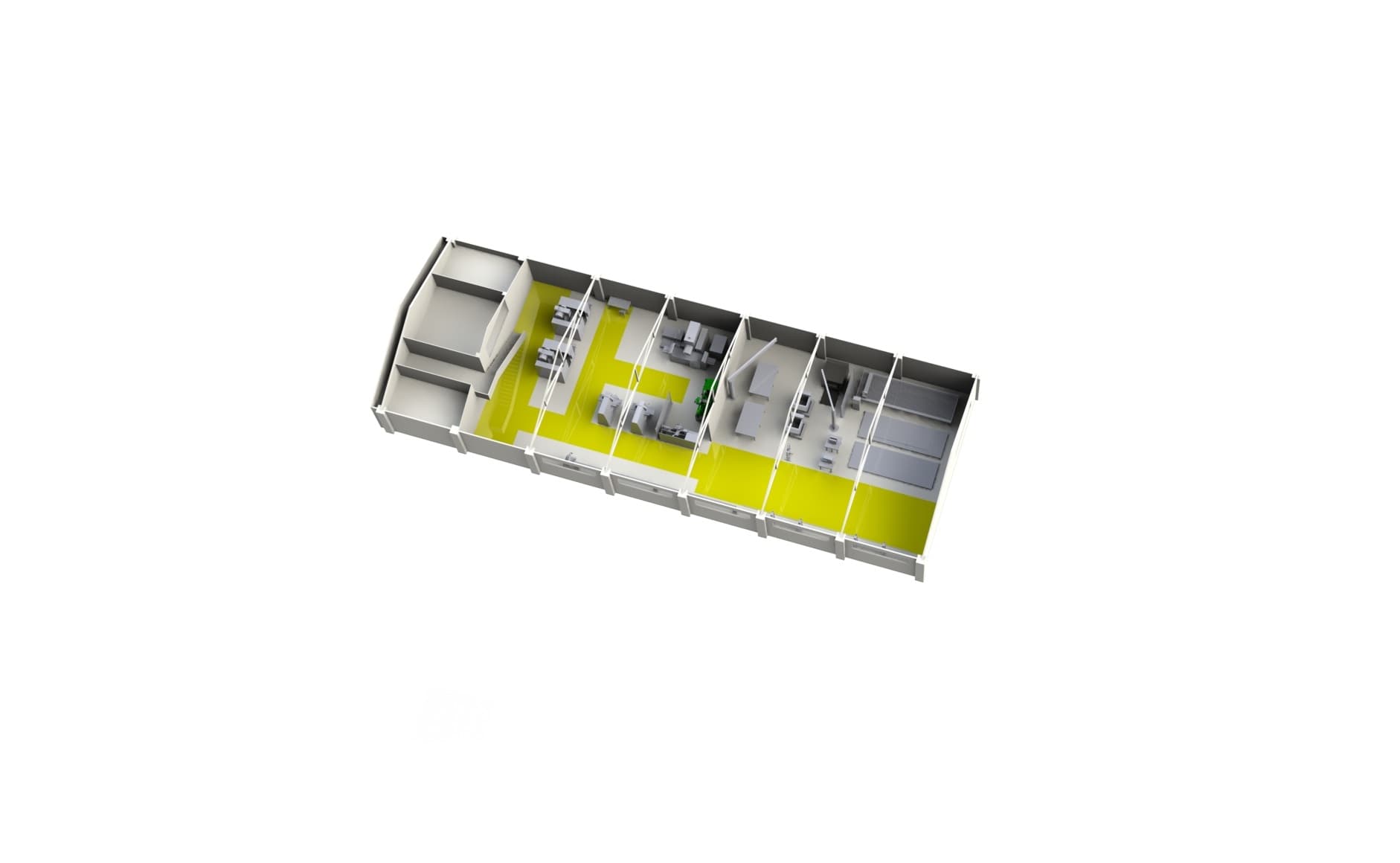
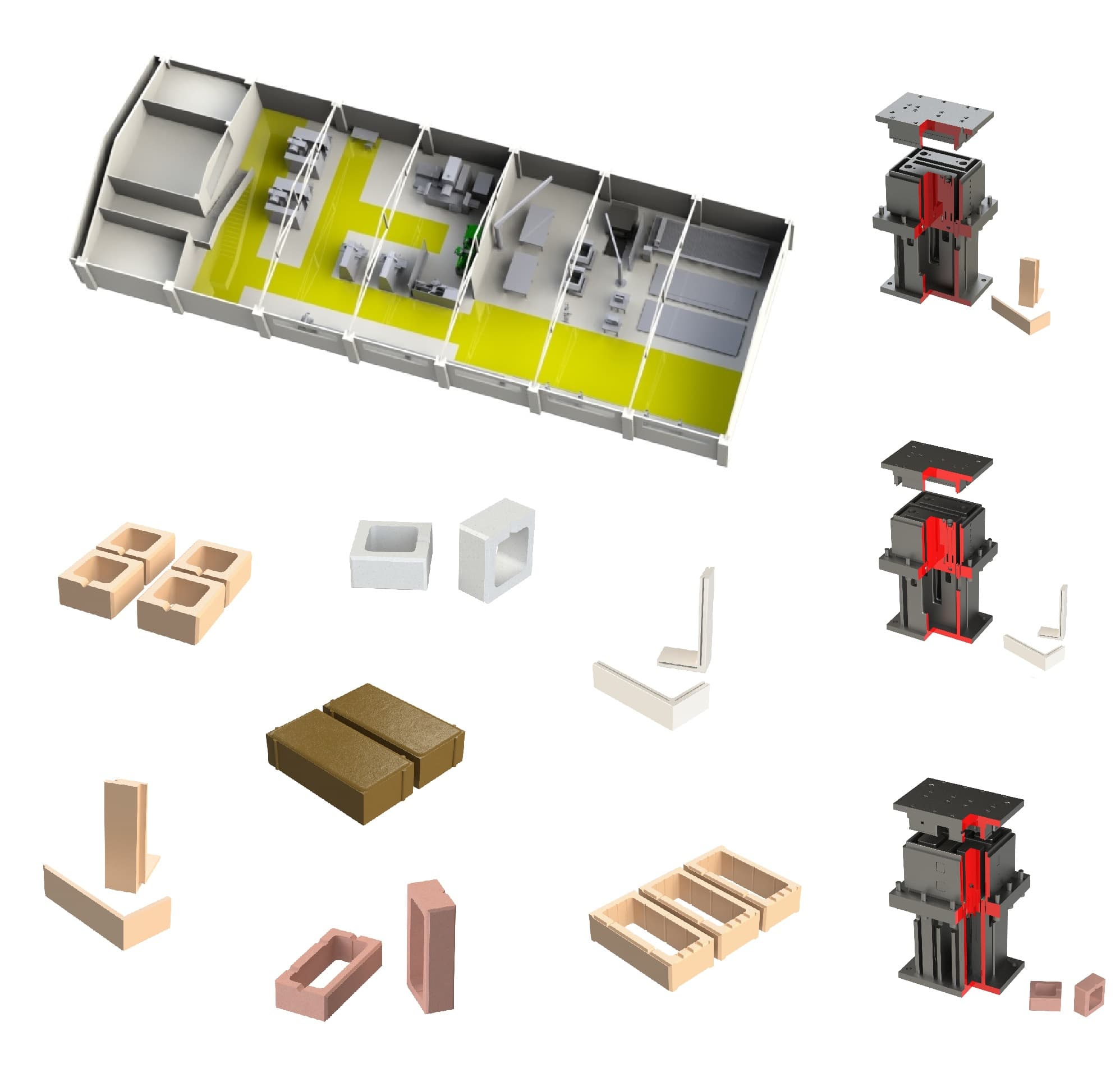
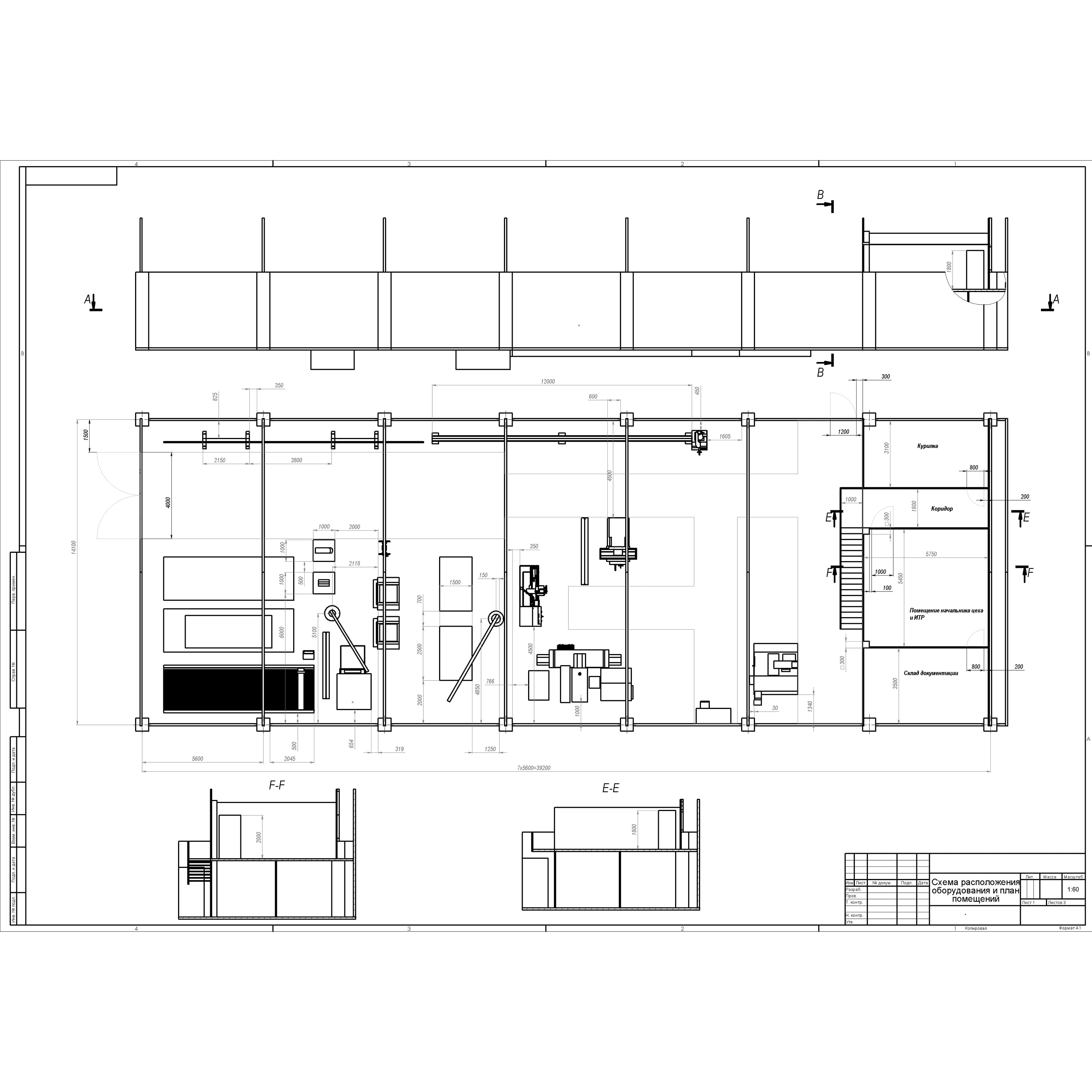
3 imagesWorkshop floor — full-cycle steel processing, sized for press tooling production. Interior — equipment laid out per the technological layout design. Layout plan — foundation requirements per unit, flow per process step.
The Challenge
A facing-brick and -tile production line is only as good as the tooling that goes into its press. The customer needed a captive workshop capable of producing that tooling — not a generic mechanical shop, but a workshop *engineered around* the specific pressing equipment, the specific products, and the specific tolerance regime the line demanded.
Why building this workshop was a one-program problem
An off-the-shelf machine shop can't be turned to press-tooling production by tomorrow. The technology, equipment, instrumentation, staffing, and infrastructure all have to be specified *together*, around the actual tooling spec, or the workshop will produce tooling that misses dimensional tolerance and the line will quietly underperform.
The full scope
The brief covered every input the workshop needed to become operational — not just the equipment list, but the manufacturing process for the customer's specific tooling, the staffing structure to run it, and the infrastructure (lighting, heating, electrical, ventilation) to host it.
Our Approach
We owned the full program — process engineering on day one, infrastructure spec on month two, layout and equipment installation through commissioning. Same practice from sketch through workshop opening day.
Tasks completed within the program
- *Tooling manufacturing technology.* Complete production process sheets for tooling fabrication on the customer's pressing equipment — the canonical answer to "how exactly do we make this die."
- *Equipment list with sourcing recommendations.* Specified the mechanical workshop equipment list and identified suitable manufacturers and suppliers for each unit, tied to the technology developed in step 1.
- *Tooling and instruments.* Listed the tooling and instruments the workshop itself needs to run, with manufacturer recommendations.
- *Technological layout.* Designed the workshop layout with explicit foundation requirements for each production unit — the layout follows from machine load and process flow, not from convenience.
- *Workshop infrastructure.* Recommendations for lighting, heating, electrical systems, ventilation, and related utilities — specified to the loads and the process.
- *Staffing structure.* The org chart, role definitions, and headcount required to run the workshop at the rated output.
Why each task interlocks with the others
The equipment list depends on the technology. The layout depends on the equipment list and foundation loads. The infrastructure depends on the equipment list and layout. The staffing depends on all of it. Decoupling these tasks would have produced a workshop that books equipment that doesn't fit the layout, draws power the panel can't supply, and needs roles that nobody hired.
Results
A 600 m² mechanical workshop, fully equipped for a full-cycle steel processing operation, dedicated to producing tooling for the customer's facing-brick and -tile semi-dry-pressing line. Operating per the technology and staffing structure delivered with the design package.
Capability the workshop now has
- *Full-cycle steel processing.* Material intake through finished die — no outsourced cycle stages.
- *Press tooling production.* Sized and equipped specifically for the customer's pressing equipment.
- *Workshop infrastructure.* Lighting, heating, electrical, ventilation, foundations — all specified to load.
- *Operational staffing.* Role definitions and headcount to run the workshop at its rated output.
What captive tooling production means for the customer
New product geometries no longer require external die houses on external schedules. Tolerance regime is owned in-house. Wear-replacement tooling can be produced on the customer's own cycle. The line is materially less dependent on external suppliers for its consumables.
Why captive tooling is strategic, not just convenient
External die houses can be excellent — but they're not on the customer's production schedule. When a die wears, the line waits. When a new product geometry is introduced, the line waits longer. Captive tooling production collapses both wait times into the customer's own scheduling control.
The 600 m² figure is sized to that strategic role. It's not a hobby shop — it's a workshop that can keep a full brick line tooled across product evolution and wear-replacement cycles, without the line ever being captive to an external die supplier's calendar.
Browse the portfolio
Filter by industry or service.
Next case studyHeat Recovery System — 350 kW Gas-Powered Reciprocating Power Plant
Industrial & Manufacturing
Related Engagements
- Industrial & Manufacturing
Press Molds for Semi-Dry Pressing — Facing-Product Family at 300 kg/cm²
Read - Industrial & Manufacturing
Heat & Humidity Curing Chamber — 8-Hour Strength Cycle with Heat Recovery
Read - Industrial & Manufacturing
Heat Recovery System — 350 kW Gas-Powered Reciprocating Power Plant
Read