Energy engineering · Heat recovery · YaMZ-8503.10
Heat Recovery System — 350 kW Gas-Powered Reciprocating Power Plant
Client
Confidential — Energy
Duration
14 weeks
Year
2022
A heat recovery system designed for a 350 kW gas-powered reciprocating power plant built on the YaMZ-8503.10 engine. Captures useful thermal output from the engine cycle that would otherwise be lost — converting a single-output power plant into a usable cogeneration unit.
Engagement Metrics
350 kW
Plant rated power
YaMZ-8503.10
Engine platform
Engine cycle thermal
Recovery scope
Cogeneration
Output mode
From the project
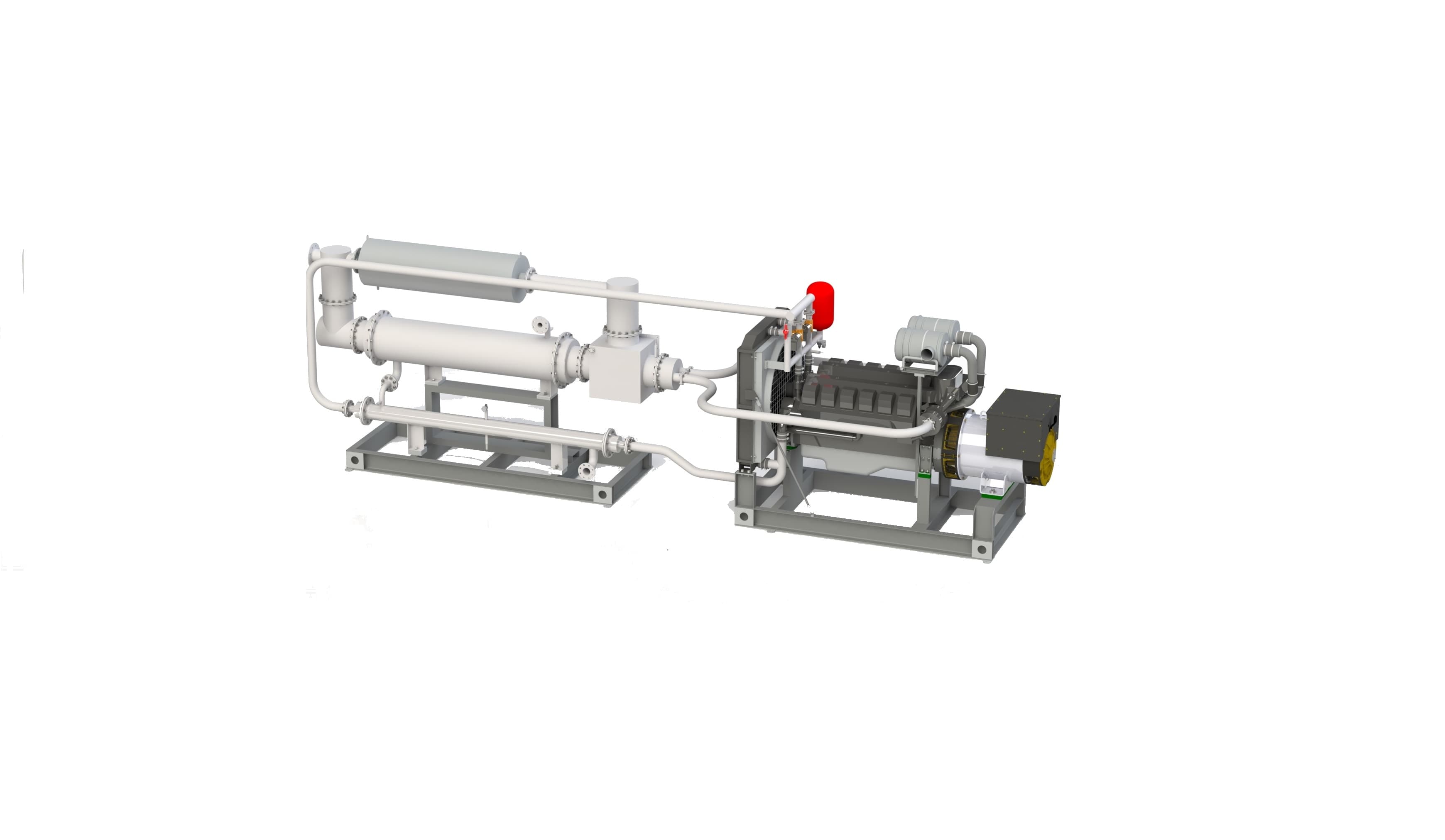
1 imageRecovery system — engineered to the YaMZ-8503.10's specific thermal map.
The Challenge
A reciprocating power plant on the YaMZ-8503.10 produces 350 kW of electrical power and a comparable thermal flux as engine cycle by-product. Without a recovery system, that thermal flux exits the plant as exhaust and coolant heat — useful energy dumped to ambient.
The brief was specific: design a recovery system that captures the engine's thermal output as usable heat, on this particular engine, at this particular rating, so the plant runs as a cogeneration unit rather than an electrical-only generator.
Why this engine, why this rating
YaMZ-8503.10 is a specific reciprocating engine platform. The recovery system has to be designed against its thermal map — exhaust temperature, coolant flow, intercooler heat, engine-block geometry — not against a generic "diesel engine." The 350 kW rating sets the thermal flux the recovery loop has to absorb.
What makes recovery engineering worth doing
A 350 kW reciprocating plant produces a similar magnitude of thermal output as electrical. Capturing even a meaningful fraction of that thermal flux as usable heat — for process water, building heat, or absorption cooling — substantially shifts plant economics versus electrical-only operation.
Our Approach
We engineered the recovery system around the YaMZ-8503.10's specific thermal map: exhaust temperature and flow, coolant loop temperature and flow, intercooler heat rejection. The system captures heat from those streams into a usable thermal output suitable for downstream consumption.
Recovery sources on this engine
- *Exhaust gas heat.* The highest-grade thermal output from the engine cycle — exhaust gas at the engine's rated power point.
- *Engine coolant.* Lower-grade but high-flow heat from the engine block cooling loop.
- *Intercooler.* Charge-air cooling heat that would otherwise be rejected to ambient.
Engineering choices
- *Exchanger selection per source.* High-grade exhaust heat and lower-grade coolant heat want different heat-exchanger geometry — sized per source rather than one-size-fits-all.
- *Integration without compromising engine cycle.* The recovery system extracts heat *without* introducing back-pressure or coolant restriction that would derate the engine itself. The 350 kW electrical rating has to hold.
- *Useful thermal output spec.* Output specified as a usable medium temperature and flow rate, not just "some recovered heat."
Results
The recovery system captures useful thermal output from the engine cycle at the 350 kW rated power point, on the YaMZ-8503.10 platform, without compromising the engine's electrical output rating.
What the plant looks like with recovery installed
- *Same electrical output.* 350 kW electrical, undiminished.
- *Recovered thermal output.* Usable heat captured from exhaust, coolant, and intercooler streams.
- *Plant economics.* Per-fuel-unit usable energy output increases meaningfully versus electrical-only operation.
Applicable downstream uses
The recovered thermal output is at a grade suitable for process water heating, building heat, or absorption-cooling input — the standard cogeneration consumption profile.
Why this is engineering, not bolt-on
A heat exchanger plugged onto the exhaust is not a heat recovery system. A heat recovery system is a coordinated package — exhaust-side exchanger, coolant-loop exchanger, intercooler-side exchanger, plumbing, controls — sized against the specific engine's thermal map and integrated without derating the engine's primary output.
The difference matters at the 350 kW rating. An undersized exchanger leaves recovery on the table. An oversized one introduces flow restriction that costs the engine output. The right system extracts the engine's by-product heat without changing what the engine was built to do.
Browse the portfolio
Filter by industry or service.
Next case studyAutomated Facing-Brick Line — 15M Bricks / Year on Semi-Dry Cement Pressing
Industrial & Manufacturing
Related Engagements
- Industrial & Manufacturing
Press Molds for Semi-Dry Pressing — Facing-Product Family at 300 kg/cm²
Read - Industrial & Manufacturing
Heat & Humidity Curing Chamber — 8-Hour Strength Cycle with Heat Recovery
Read - Industrial & Manufacturing
Mechanical Engineering Workshop — 600 m² Tooling Production Build-Out
Read