
Reverse Lab

Reverse Engineering Services

Software Reverse Engineering Services

Decode binaries. Recover logic. Restore source code. Engagements include binary analysis, decompilation services, and related work — all under NDA.

  • binary analysis
  • decompilation services
  • source code recovery
  • legacy software analysis
  • malware reverse engineering
  • executable analysis
Under NDACustom scopingGlobal delivery

Overview

About Our Software Reverse Engineering Services

Professional software reverse engineering services for binary analysis, decompilation, and source code recovery. Legacy systems and security research under NDA.

Engagements are scoped to a fixed deliverable list before kickoff and run under a written NDA. Daily lab notes and weekly written status keep the work auditable from your side at every step.

In the lab

Pair-review of decompiled output. Senior engineers, every step.

Software RE Lead — anonymized portrait

Software RE Lead

Anonymized pre-NDA

How we work

How we work

We adapt and improve — not blind-copy

In both reverse engineering and custom development, we never thoughtlessly clone. We carry out improvements and adaptations to the customer's specific task, because the existing solution often cannot fully satisfy the customer's request. Reverse engineering surfaces the design intent; the engineering that follows decides what to keep, what to change, and what to engineer from scratch.

Engineering analysis

Mathematical & physical modeling, where the project needs it

As part of both reverse engineering and custom development projects, we perform in-depth engineering analysis based on mathematical and physical modeling. Depending on project requirements this may include structural calculations, fluid dynamics, gas flow analysis, thermal processes, stress and load simulations, process modeling, and validation of engineering assumptions affecting system performance and operational reliability — used for design verification, technology assessment, process optimization, and validation of technical parameters for production and commercial deployment.

When you call us

When You Need Software Reverse Engineering Services

Patterns we see across engagements. Each can stand alone or combine with adjacent capabilities.

  • Legacy software analysis when source code is lost

    Recover source-level logic and architecture from compiled binaries. Common on systems where the original toolchain, vendor, or developer is gone.

  • Binary analysis for security review

    Inspect closed-source executables for vulnerabilities, embedded credentials, and unsafe behavior. Outputs feed responsible disclosure or internal hardening.

  • Decompilation of proprietary file formats

    Reverse-engineer the parsers, codecs, and serialization logic embedded in shipping binaries to enable interoperability with downstream tooling.

  • Malware reverse engineering

    Static and dynamic analysis of malicious executables under controlled conditions, with full IOC reports and behavior documentation.

  • Source code recovery for sustainment programs

    Reconstruct maintainable source for legacy software in long-life platforms — defense, industrial, medical — where the alternative is a forced rewrite.

  • Anti-tamper and protection analysis

    Document how a target binary defends itself, and how its protection scheme interacts with the rest of the system. Engagement scope strictly defined in writing.

  • Executable analysis during M&A diligence

    Confirm what a target's binaries actually do versus what their architecture documentation claims. Confidential; results delivered only to the acquiring party.

Methodology

Our Software Reverse Engineering Services Process

Vertical phasing — each step's deliverables agreed before kickoff, and not closed until you sign off.

  1. 01

    Phase 01

    NDA and engagement

    Mutual NDA executed before any binaries, source, or technical materials change hands. Scope, deliverables, and legal basis (DMCA §1201(f), interoperability, security research) confirmed in writing.

  2. 02

    Phase 02

    Discovery and triage

    Initial binary intake, architecture identification, packer / obfuscation profiling, and a written engagement plan with fixed scope.

  3. 03

    Phase 03

    Static analysis

    Disassembly, decompilation, control-flow reconstruction, and symbol recovery using IDA Pro, Ghidra, and Binary Ninja.

  4. 04

    Phase 04

    Dynamic analysis

    Instrumented execution, debugger sessions, and trace capture where the static view is incomplete or actively obfuscated.

  5. 05

    Phase 05

    Reconstruction and documentation

    Annotated source, architecture diagrams, and reproducible build artifacts shipped on a rolling basis — not as a final scramble.

  6. 06

    Phase 06

    Verification

    Behavioral parity testing against the original binary, with a written test plan and a signed attestation when required.

Tooling

Software Reverse Engineering Services Tools and Technologies

Named tools, in production. We don't list anything we don't actually use.

  • Tool

    IDA Pro

    Production use — versioned per-engagement and pinned in our build.

  • Tool

    Ghidra

    Production use — versioned per-engagement and pinned in our build.

  • Tool

    Binary Ninja

    Production use — versioned per-engagement and pinned in our build.

  • Tool

    Radare2

    Production use — versioned per-engagement and pinned in our build.

  • Tool

    x64dbg

    Production use — versioned per-engagement and pinned in our build.

  • Tool

    WinDbg

    Production use — versioned per-engagement and pinned in our build.

  • Tool

    OllyDbg

    Production use — versioned per-engagement and pinned in our build.

  • Tool

    Hex-Rays

    Production use — versioned per-engagement and pinned in our build.

  • Tool

    Frida

    Production use — versioned per-engagement and pinned in our build.

  • Tool

    Binary Analysis Platform (BAP)

    Production use — versioned per-engagement and pinned in our build.

  • Tool

    QEMU + Unicorn

    Production use — versioned per-engagement and pinned in our build.

ghidra@workstation ~ binary

$ ghidra-server --import target.elf --auto-analyze

Loaded ELF (x86_64) · 12,841 functions identified

$ decomp --output target.c --rename-known --include-bookmarks

Wrote target.c · 287,000 LOC · 43 modules

$

Deliverables

What You Receive from Our Software Reverse Engineering Services

Artifacts handed over at close-out. Each is reproducible and self-contained.

  • Annotated decompiled source code in your preferred target language
  • Architecture and data-flow documentation
  • Reproducible build artifacts with a written build plan
  • Behavioral test harness demonstrating parity with the original binary
  • Methodology appendix recording every tool, version, and command
  • 30-day post-delivery support window

Sample deliverable

software-reverse-engineering · final report

rev.04 · pdf

Engagement summary

Findings

Our practice

Senior engineers, on the binary, line by line.

Software reverse engineering is read-the-code work. Our practitioners spend most of their week inside other people's binaries — that's the depth that makes the deliverable defensible.

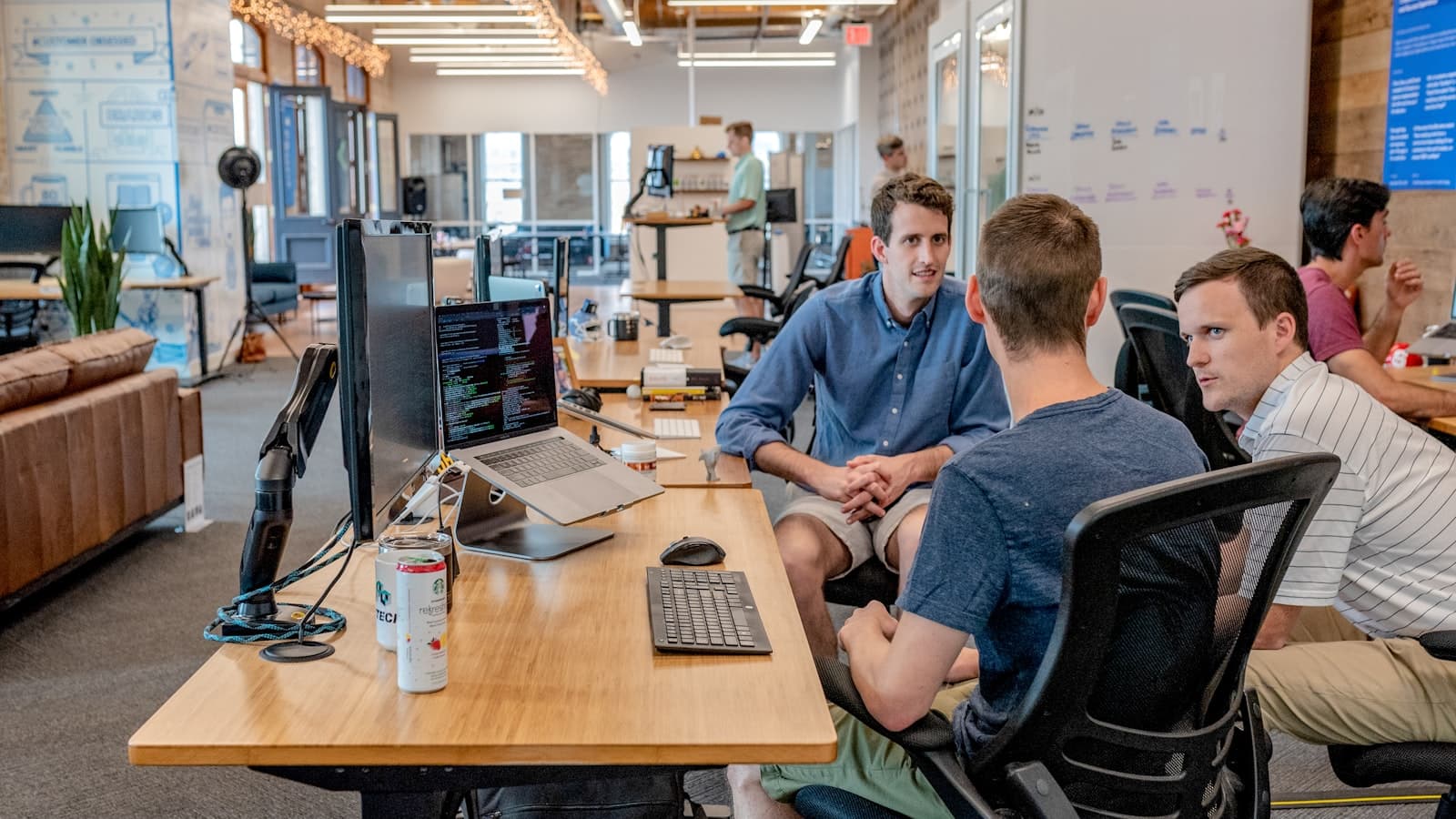
Senior reverse engineer reviewing decompiled output

Decompiler in practice

Senior engineers run static and dynamic passes on every binary. No junior layers between you and the analysis.

Anonymized senior engineer — Software RE Lead

Software RE Lead

Anonymized pre-NDA

Anonymized senior engineer — Senior Reverse Engineer

Senior Reverse Engineer

Anonymized pre-NDA

Anonymized senior engineer — Decompilation Specialist

Decompilation Specialist

Anonymized pre-NDA

Anonymized senior engineer — Tooling Engineer

Tooling Engineer

Anonymized pre-NDA

Decompile the binary, recover the design intent, ship source your team can extend without us.

Software RE Lead, Reverse Lab

Questions

Software Reverse Engineering Services FAQ

Pulled from real client conversations. If yours isn't here, ask directly.

  • Software reverse engineering is legal in most jurisdictions when performed for interoperability, security research, error correction, or other lawful purposes. In the United States, DMCA Section 1201(f) provides an explicit interoperability carve-out. The EU Software Directive (2009/24/EC) Article 6 grants similar rights. We document the legal basis for every engagement in writing before work begins.

  • Yes — working from binaries alone is the core of our software reverse engineering services. We use IDA Pro, Ghidra, Binary Ninja, and dynamic instrumentation to recover source-level logic, identify data structures, and reconstruct architecture. Original source is helpful for cross-checking but not required.

  • Modern decompilers produce readable C-like output with recovered control flow. Variable names and comments are lost, so our work includes annotation, type inference, and structural cleanup. The result is reviewable source that engineers without reverse engineering training can work with.

  • Most engagements run between four and fourteen weeks. The first week is scoping and NDA execution; the last week is handover with a 30-day support window. Larger source-code-recovery programs run longer; we provide a fixed scope letter before any analysis begins.

  • Every engagement runs under mutual NDA. Materials are stored on encrypted-at-rest infrastructure under our sole control. When clean-room separation is required, the analysis team produces a written specification and a separate reconstruction team builds from spec only — never seeing the original artifact.

  • Yes, under defined research scope. We analyze malicious executables in isolated environments, document IOCs, capture network behavior, and report findings under a coordinated-disclosure framework where applicable. We do not develop or distribute offensive tooling.

  • Annotated source in your preferred language (C, C++, Rust, Go, Python), architecture diagrams in SVG and PDF, reproducible build artifacts with Dockerized toolchains where applicable, and a test harness demonstrating behavioral parity. Format negotiable during scoping.

  • Engagements start with a scoping phase under NDA. Project length and pricing depend on system complexity, source-code availability, and deliverable scope. We work fixed-bid for well-bounded scopes and time-and-materials for exploratory work. Specific rates are shared after intake.

  • Yes. We routinely work on x86, x86-64, ARM, AArch64, MIPS, PowerPC, RISC-V, SPARC, and various microcontroller targets. For uncommon embedded architectures we extend our toolchain rather than refusing the work.

Selected work

Engagements where this capability carried significant scope.

Case studies for this service available under NDA

Most of our work in this area is covered by mutual NDA. Request anonymized references during your inquiry — we share them with prospective clients after NDA execution.

Engage

Ready to discuss your software reverse engineering services project?

All inquiries reviewed under NDA. We respond within two business days with a scoped engagement plan and fixed deliverables list.

Senior engineers · Anonymized pre-NDA