Mechanical engineering · Agriculture · Working prototype
Screw-Type Woodcutter — Conical-Screw Splitter Prototype
Client
Confidential — Forestry & Agriculture
Duration
6 weeks
Year
2023
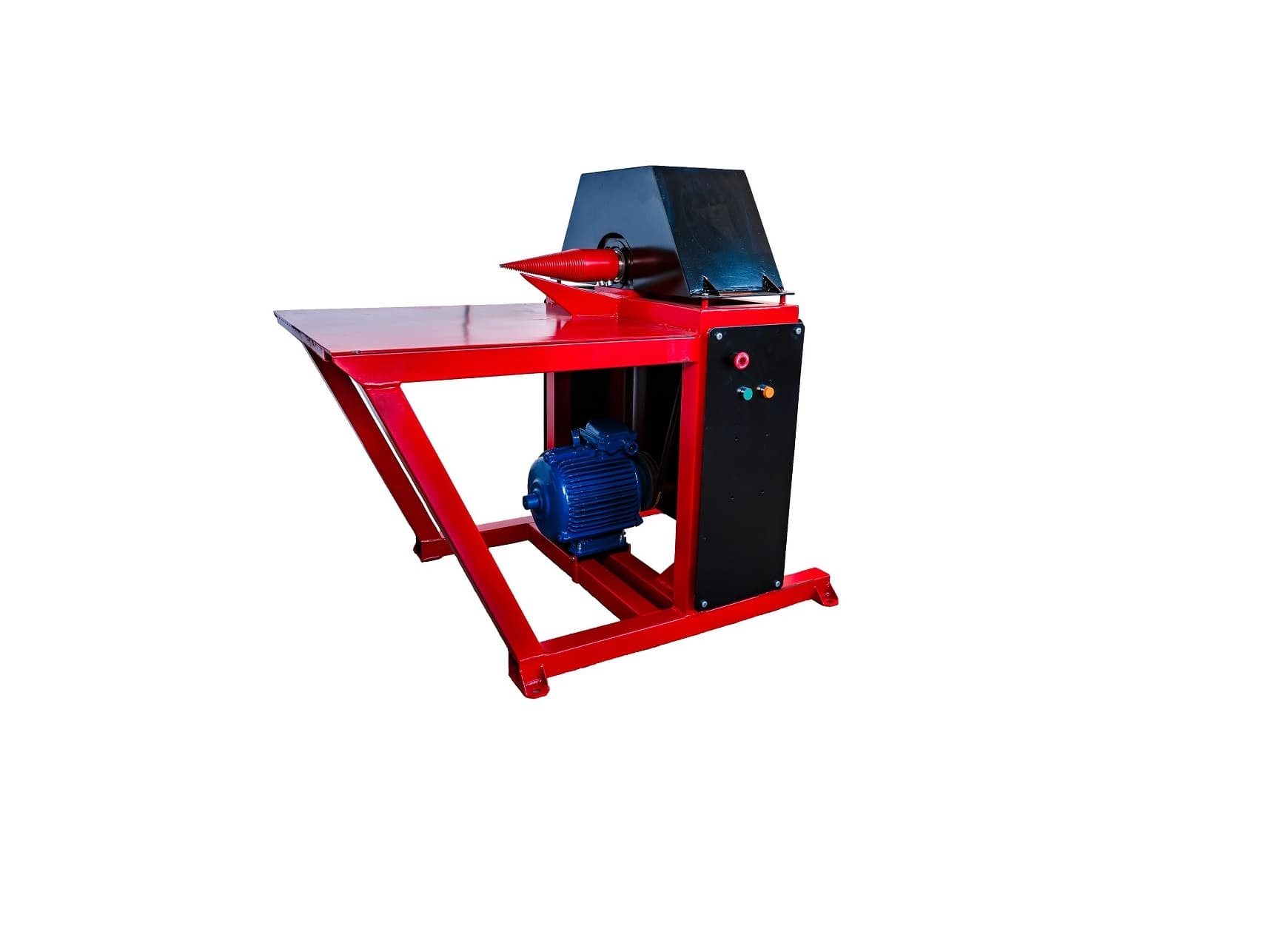
Developed and produced a prototype of a screw-type woodcutter for fast splitting of firewood. A conical screw, threaded into the trunk, splits the log into two parts as it advances — single mechanical motion, no hydraulic stack, materially faster per-log cycle than a hydraulic splitter.
Engagement Metrics
Conical screw
Splitting principle
Single-pass split
Cycle
None
Hydraulics
Working prototype
Status
From the project
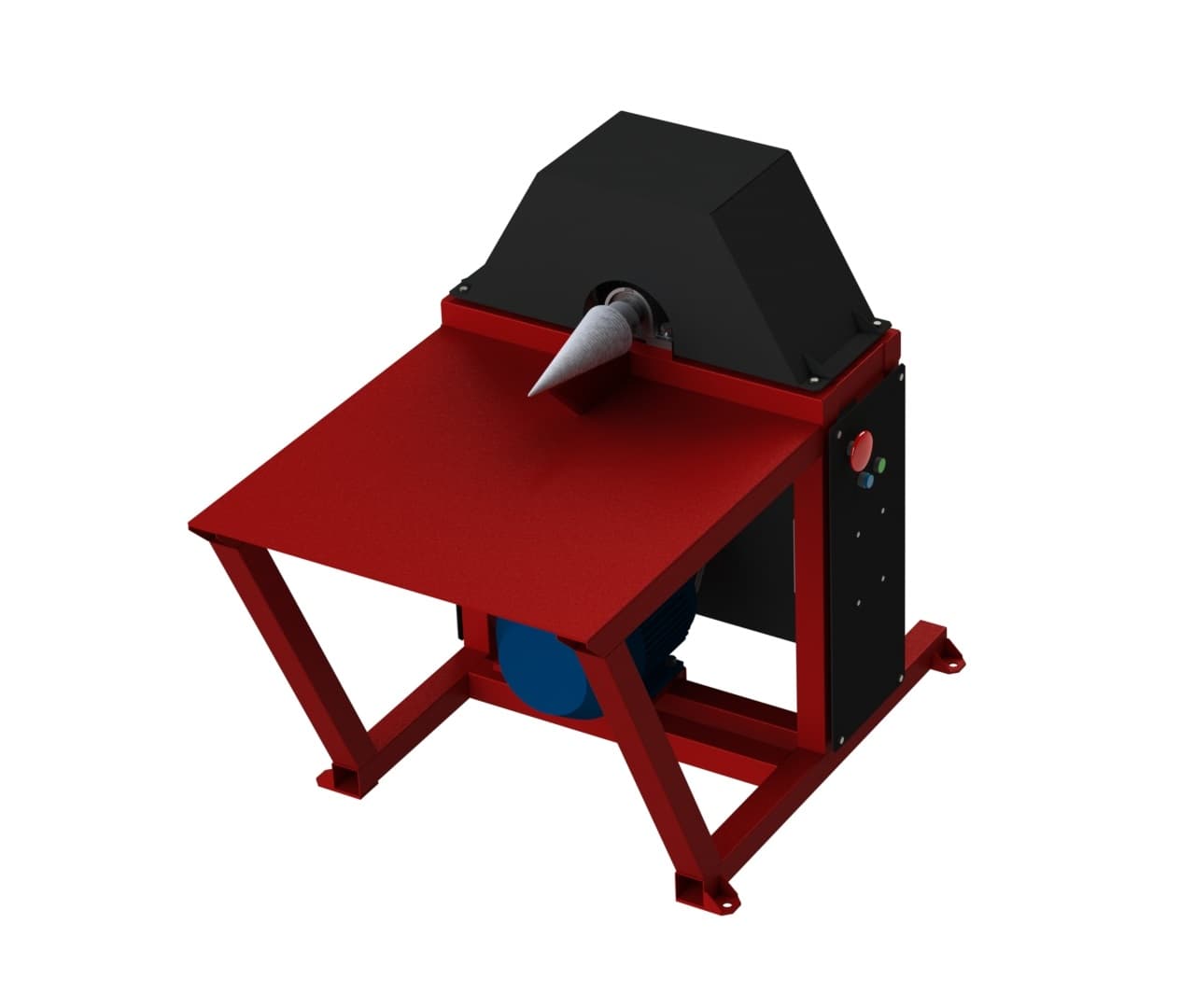
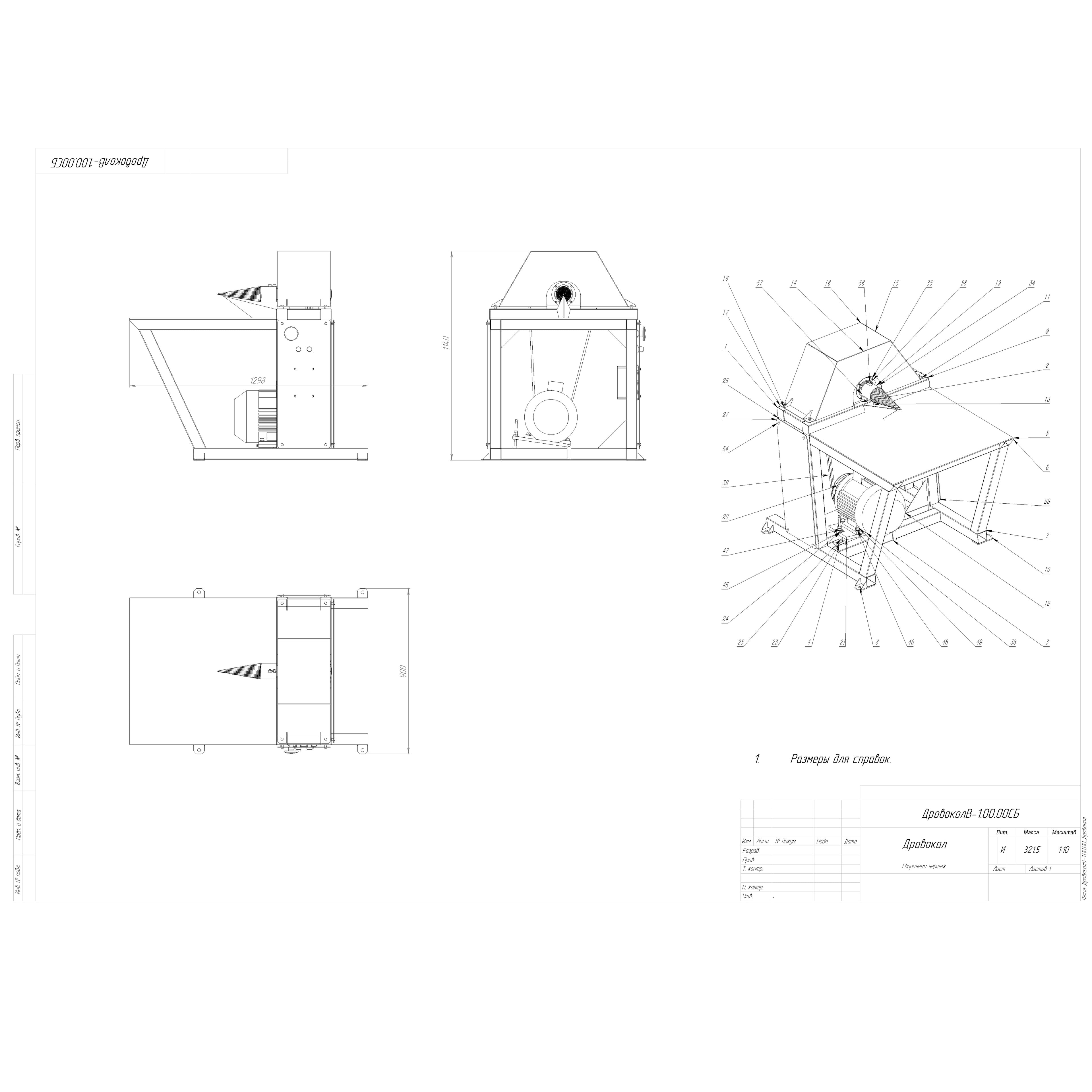
3 imagesWorking prototype — conical screw splits the log in a single mechanical motion. CAD reference — drive, screw geometry, and frame. Assembly view — conical screw and drive arrangement.
The Challenge
Traditional hydraulic log splitters are slow on the per-log cycle: pump, advance, retract, reset. Even with a healthy hydraulic stack, the wait-for-reset interval dominates per-log throughput. The client wanted a simpler, faster splitting principle for firewood-class stock — one that didn't require a hydraulic stack at all.
Where hydraulic splitters lose time
- *Advance.* Pump-driven ram pushes the wedge into the log.
- *Split.* The actual splitting takes a fraction of a second.
- *Retract.* Ram returns to start position.
- *Reset.* Operator places the next log.
The split itself is fast. Everything else is slow. Eliminating the advance/retract cycle removes most of the per-log time.
Our Approach
We built around a conical screw. The screw is mounted to a driven shaft; as it rotates, its threaded conical body bores into the trunk and the wedge geometry forces the log apart along its grain. The result is a single mechanical motion — no pump, no advance/retract cycle — that splits a log per revolution-sequence rather than per hydraulic stroke.
How the conical screw splits
The screw has a tapered, threaded profile. When driven, the leading threads engage end-grain wood; the taper acts as a wedge as the screw advances. The log splits along its natural grain direction as the wedge geometry forces it apart. The operator's role is to position the log against the screw and let the drive do the rest.
Mechanical package
The prototype mechanical package was designed in CAD with the screw geometry, drive arrangement, and frame specified for prototype-grade build. Drive sizing, screw geometry, and frame design were all part of the engineering deliverable.
Results
A working prototype was developed and produced. The screw-type splitter handles firewood-class stock substantially faster than the hydraulic equivalent on a per-log basis, with a simpler drive train.
Operating differences
- *No hydraulics.* Mechanical drive only — fewer service items, no hydraulic fluid handling.
- *Faster per-log cycle.* Single mechanical motion replaces the four-step hydraulic cycle.
- *Simpler operator role.* Position the log against the screw; the drive does the rest.
When a conical-screw splitter beats a hydraulic splitter
Conical-screw splitters aren't a universal replacement — they're a faster solution for firewood-class stock where the splitting force needed is well-bounded and the log geometry is well-understood (round, end-grain accessible).
For those use cases:
- The per-log time saving is significant.
- The drive train is simpler and cheaper.
- Service load is lower.
For harder stock or geometry that doesn't present end-grain to a screw, hydraulic splitters remain the right tool.
Browse the portfolio
Filter by industry or service.
Next case studyPress Molds for Semi-Dry Pressing — Facing-Product Family at 300 kg/cm²
Industrial & Manufacturing
Related Engagements
- Industrial & Manufacturing
Press Molds for Semi-Dry Pressing — Facing-Product Family at 300 kg/cm²
Read - Industrial & Manufacturing
Heat & Humidity Curing Chamber — 8-Hour Strength Cycle with Heat Recovery
Read - Industrial & Manufacturing
Mechanical Engineering Workshop — 600 m² Tooling Production Build-Out
Read