Process equipment · Building materials
Semi-Dry Press for Facing Bricks & Tiles — 900 Bricks per Hour
Client
Confidential — Building Materials
Duration
14 weeks
Year
2023
Designed and manufactured a press for the production of facing bricks and tiles by semi-dry pressing on a cement binder. Rated capacity: 900 conventional bricks per hour — held sustainably in production, not just at startup.
Engagement Metrics
900 bricks/hr
Rated output
Semi-dry, cement-bound
Process
Facing brick · Tile
Output types
Manufactured & delivered
Status
From the project
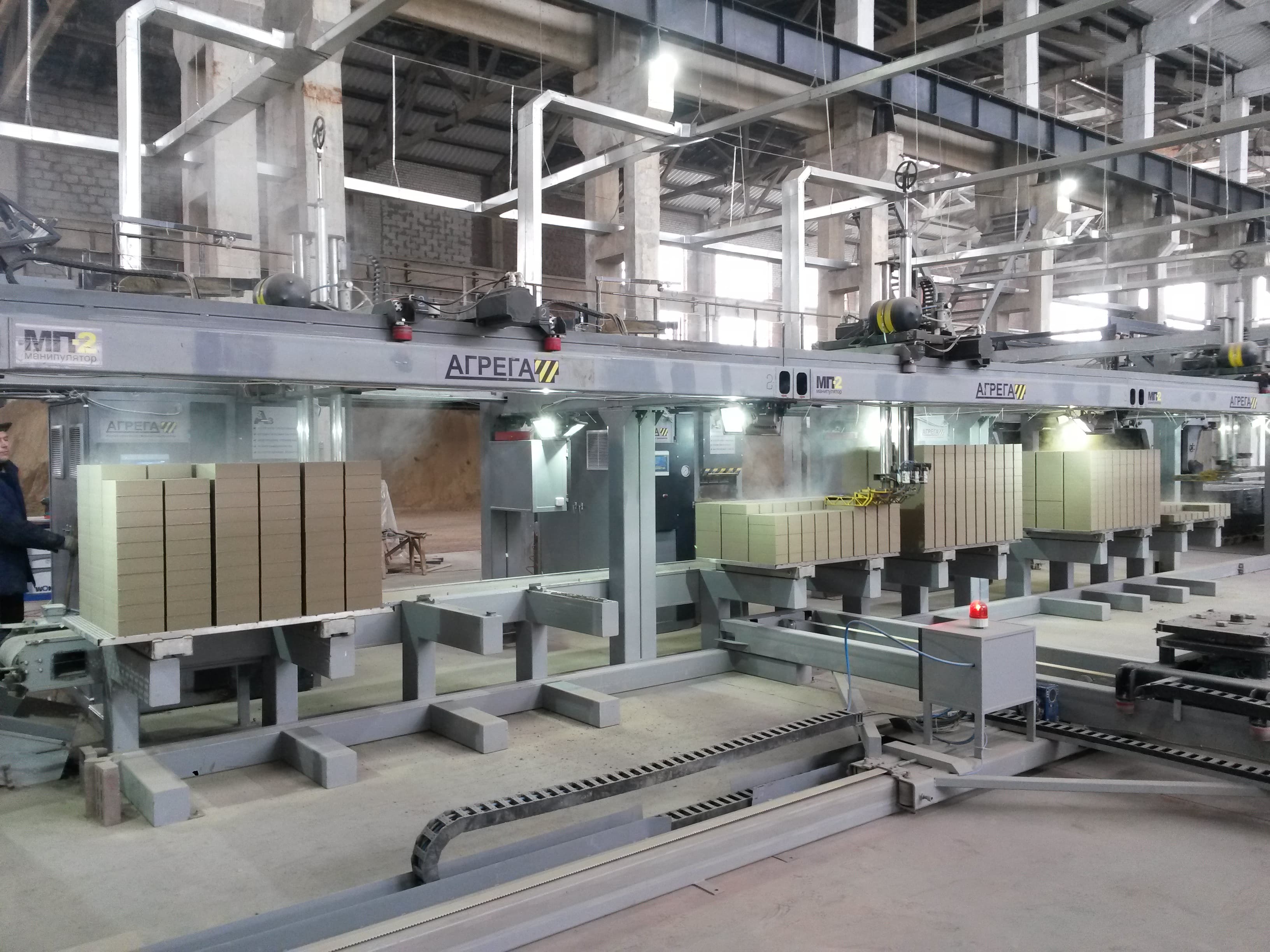
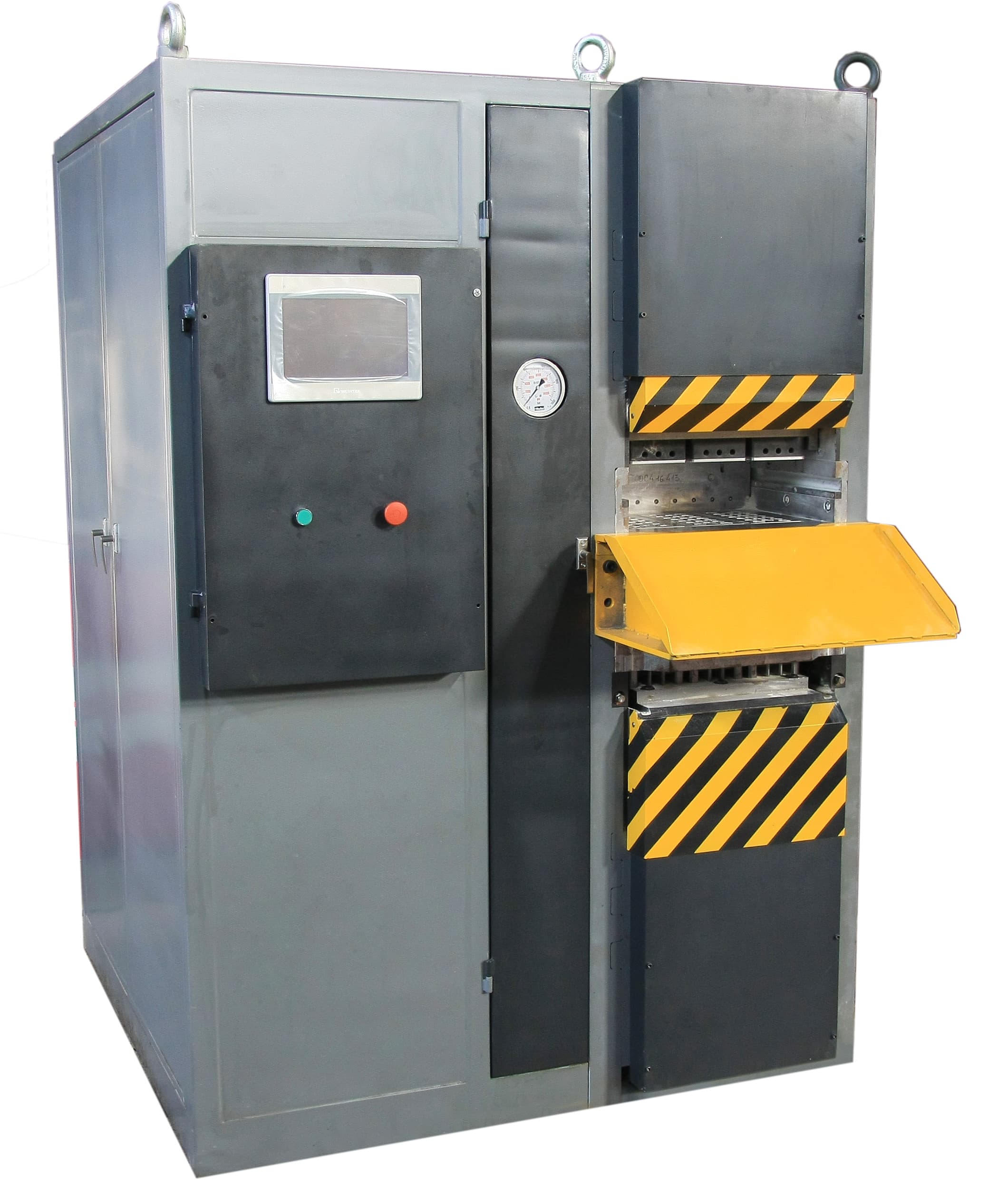
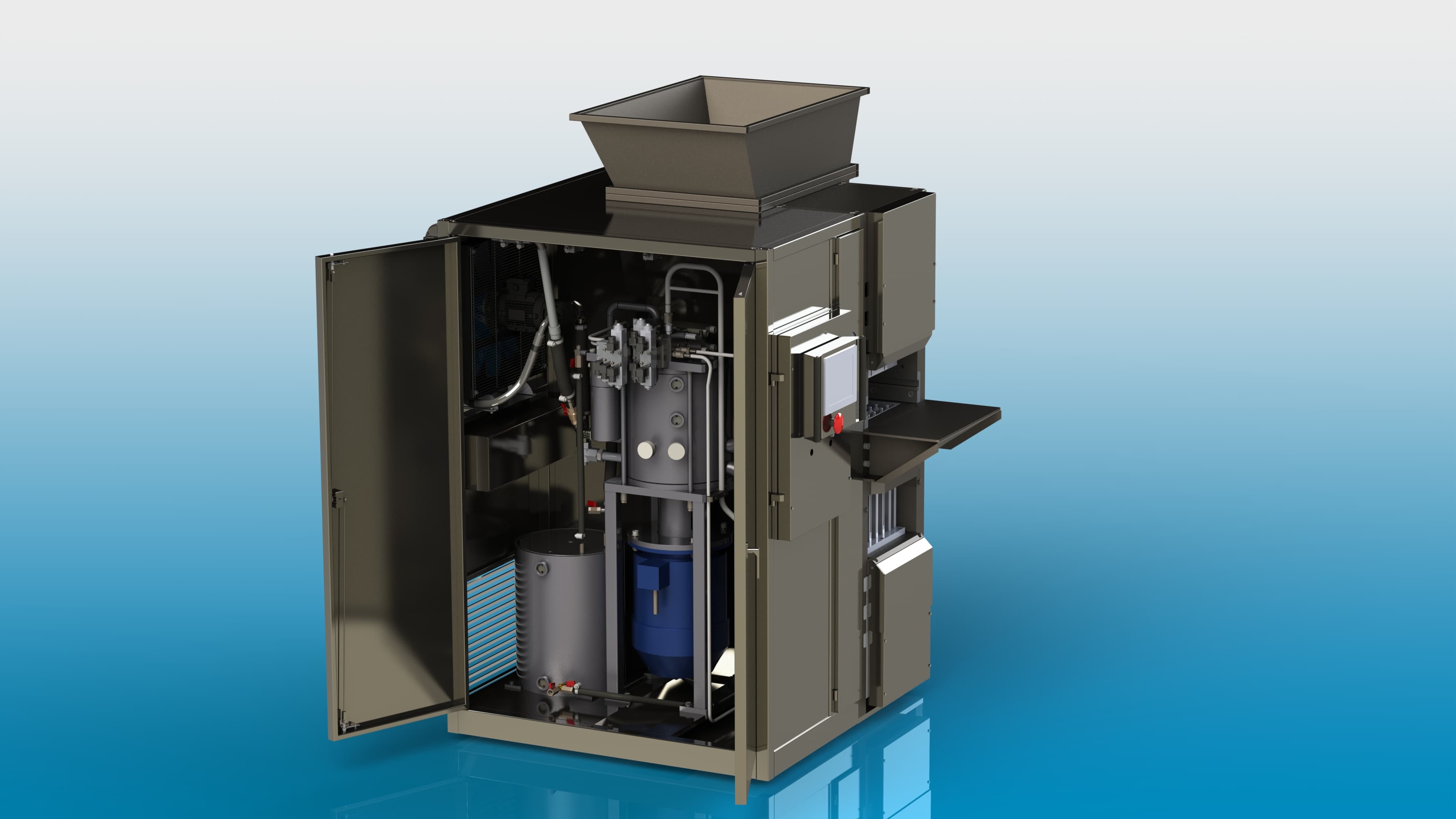
3 imagesAs-built — installed and producing at rated 900 bricks/hour. Final design render — frame and tooling specified for sustained operation. CAD assembly — full mechanical package shipped to manufacturing.
The Challenge
Facing-brick producers on semi-dry cement binder need a press that hits a defined hourly output without becoming a maintenance burden. Cement-bound mixtures are abrasive — tooling, dies, and the press frame have to survive sustained production, not just rate well on the first hundred cycles.
Why "900/hr at startup" isn't enough
A press that hits 900 bricks per hour for the first eight hours and then degrades is a press that will quietly underperform for the rest of its service life. The buyer compares the spec sheet to the second machine's spec sheet — but lives with the third month, the sixth month, the second year.
The brief was a press that hits 900/hr *in production*, not at startup.
Our Approach
We engineered the press around the long-run case: tooling material and clearances chosen for cement-binder abrasion, frame sized for sustained tonnage rather than peak, and a cycle architecture that holds the rated 900-piece-per-hour throughput in production rather than just at startup. The full CAD package was produced before manufacturing, with a built and tested machine as the deliverable.
Design choices that matter at the 2-year mark
- *Tooling material.* Selected for cement-binder abrasion — extends die life past the startup honeymoon.
- *Die clearances.* Sized so wear over service life doesn't migrate dimensional tolerance.
- *Frame mass.* Specified for sustained tonnage at the rated cycle rate.
- *Hydraulic stack.* Sized to hold the cycle without temperature-induced derating.
- *Service access.* Die replacement and frame maintenance designed for a working factory, not an engineering bay.
Deliverable
Full CAD package, mechanical drawings, BOM, manufacturing prints, and the built machine — manufactured and delivered.
Results
The press was manufactured and delivered. It produces facing bricks and tiles by semi-dry pressing on a cement binder at the rated 900 conventional bricks per hour.
What the buyer actually got
- A press rated at 900/hr that holds the rating in continuous production.
- Service intervals matched to the abrasion profile of cement-bound mixtures.
- A mechanical package the buyer's maintenance team can read and act on.
- Output covering both facing brick and tile, not a brick-only machine repurposed for tile.
Where this press fits in a production line
The press is designed to integrate into a wider production line — feeding, curing, and palletization can run upstream and downstream without dedicated handling between cells. For producers building toward the fully-automated line architecture, the press is the load-bearing stage; the line layout decisions follow from press cycle behavior and exit geometry.
Browse the portfolio
Filter by industry or service.
Next case studyBranch & Firewood Woodchipper — 50mm-Capable Shredder
Industrial & Manufacturing
Related Engagements
- Industrial & Manufacturing
Press Molds for Semi-Dry Pressing — Facing-Product Family at 300 kg/cm²
Read - Industrial & Manufacturing
Heat & Humidity Curing Chamber — 8-Hour Strength Cycle with Heat Recovery
Read - Industrial & Manufacturing
Mechanical Engineering Workshop — 600 m² Tooling Production Build-Out
Read