Medical device engineering · Working prototype
Oxygen–Helium Therapy Device — Clinical Prototype
Client
Confidential — Medical Devices
Duration
20 weeks
Year
2024
Developed and produced a working prototype of an oxygen–helium therapy device — a heated, mixed-gas inhalation system used in pulmonology, cardiology, ophthalmology, sports and diving medicine, hypothermia treatment, and complex care for viral pneumonia including COVID-19. One device, a clinic-to-home form factor, the same indication set as fixed installations.
Engagement Metrics
Working prototype
Status
5+
Clinical settings
Pulmonology · Cardio · Sports · Diving
Treatment areas
Matches fixed installations
Indication set
From the project
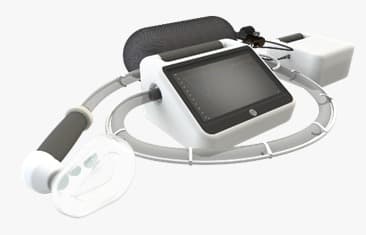
1 imageWorking prototype — mixed-gas delivery, heating, and clinical interface in one unit.
The Challenge
Heliox-based therapy is well-established. Mixing oxygen and helium and delivering the mixture warm improves gas exchange, blood circulation, thermoregulation, and cognitive function. The indication list is long: pulmonological disease, cardiology, ophthalmology, hypothermia recovery, sports and diving medicine, and complex care for viral pneumonia including COVID-19.
Why most heliox devices stay in fixed installations
The physics work fine. The economics and logistics don't.
Most existing devices are large fixed installations: a hospital department buys one, mounts it, and runs the protocol from a dedicated room. That works for tertiary hospitals — but it leaves ambulance services, sports clubs, diving stations, and home-care settings out entirely. The clinical protocol is the same regardless of venue; the form factor is what determines whether the protocol can actually be delivered.
The brief was to engineer a device that hit the same indication set as a fixed installation in a footprint a clinic or ambulance team could specify, deploy, and operate without changing how the clinician thinks about the treatment.
Our Approach
We engineered the gas blending, heating, and delivery subsystems as a single integrated device — mixing ratio control, temperature regulation, patient interface, alarming, and fail-safes. Safety-critical control was specified into the architecture from the start rather than added late.
Subsystems integrated into one unit
- *Gas blending.* Controlled-ratio oxygen + helium mixing with monitored composition.
- *Heating.* Warm-mixture delivery — heliox therapy at the clinically-effective temperature range.
- *Patient interface.* Standard inhalation interface compatible with existing clinical practice.
- *Control and monitoring.* Operator interface with the protocol parameters and alarming the clinician needs.
- *Safety architecture.* Fail-safe behavior on oxygen sensor fault, heater fault, supply interruption, and patient-side disconnect.
Engineering build-out
The prototype was built end-to-end: mechanical enclosure, internal gas path, control electronics, and operator interface. It targets the same indications as fixed installations — pulmonology, cardiology, ophthalmology, hypothermia, sports and diving medicine, and complex care for viral pneumonia — but in a footprint a clinic, ambulance team, or home-care setting can actually deploy.
Results
A fully functional prototype was produced and is in evaluation for clinical use. The unit covers the indication set the client targeted, including complex COVID-19 and viral pneumonia care, and is suitable for use across hospitals, ambulance stations, diving stations, sports clubs, and the home care setting.
What the prototype proves
- *Form factor works.* The clinic-to-home footprint is achievable without compromising the heliox protocol.
- *Indication coverage holds.* Pulmonology, cardiology, ophthalmology, hypothermia, sports and diving medicine, and complex viral-pneumonia care are all addressable.
- *Safety architecture is real, not bolted on.* Sensor faults, heater faults, supply interruption, and patient-side disconnect all degrade safely.
Indications covered by the prototype
- *Pulmonology.* Improved gas exchange in obstructive and restrictive disease; complex care for viral pneumonia including COVID-19.
- *Cardiology.* Adjunct therapy where peripheral oxygenation and circulation are the limiting variables.
- *Ophthalmology.* Conditions where local oxygenation is part of the treatment regime.
- *Hypothermia recovery.* Heated mixture delivery as part of core warming.
- *Sports medicine.* Recovery and cognitive performance protocols.
- *Diving medicine.* Decompression-related care where heliox is already standard.
Why the form factor matters
A device the clinician can put on a cart, in an ambulance, or in a home care setting is not the same product as one that lives in a hospital sub-basement. The clinical effect is identical; the *deployment* is what determines whether the patient receives the treatment.
For the underserved venues — ambulance services, sports clubs, diving stations, home care — the prototype represents the first realistic specification path. The protocol the clinician already knows transfers without change; only the device does.