Aesthetic devices · Non-contact treatment
Gas–Liquid Peeling Device — Non-Contact Aesthetic Treatment Device
Client
Confidential — Aesthetic Medical Devices
Duration
12 weeks
Year
2023
A gas–liquid peeling device engineered for cosmetic procedures: non-contact mechanical peeling, contouring massage, skin resurfacing, and related aesthetic treatments. Uses controlled gas–liquid stream as the treatment medium — no direct mechanical contact with the skin.
Engagement Metrics
Gas–liquid stream
Treatment modality
Non-contact
Contact mode
Peeling · Massage · Resurfacing
Applications
Clinic / Aesthetic medical
Setting
From the project
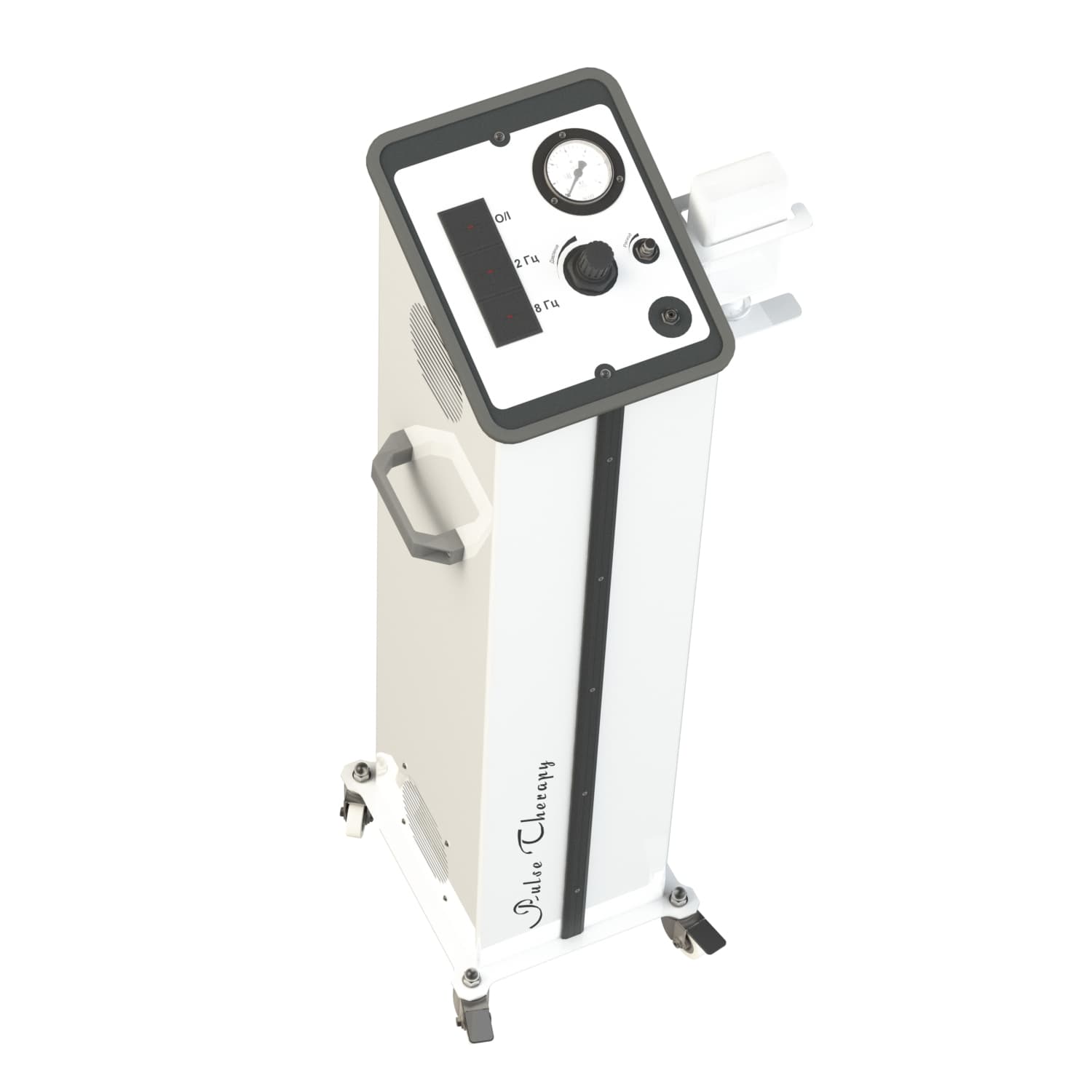
1 imageClinical instrument — non-contact gas–liquid stream, operator-tunable intensity.
The Challenge
Mechanical peeling — the controlled removal of the outermost epidermal layer to drive cosmetic resurfacing — has historically used direct-contact instruments (rotating heads, abrasive tips, manual exfoliants). Direct contact has trade-offs: variable pressure, operator-dependent uniformity, and a recovery period for the patient after treatment.
A gas–liquid stream approach replaces direct mechanical contact with a controlled jet. Done right, that gives the operator a tunable treatment intensity and a uniformity that doesn't depend on operator pressure technique. Done wrong, it produces inconsistent stream geometry, uneven coverage, and uncomfortable treatment.
What the device needed to deliver
- *Stable gas–liquid stream geometry.* The treatment outcome depends on stream pattern repeatability across the treatment area.
- *Tunable intensity.* Different procedures (peeling vs contouring massage vs resurfacing) want different stream profiles.
- *Clinical-grade build.* The device operates in a clinic or aesthetic medical setting — build, finishes, and sterilization-compatibility have to match that environment.
- *Operator-friendly.* The treatment technique should be teachable in a reasonable training cycle; the device shouldn't require specialty operator skill to use uniformly.
Our Approach
We engineered the device around stable gas–liquid stream delivery and operator-friendly controls — non-contact treatment without operator-pressure variability.
Engineering inputs
- *Stream geometry.* Nozzle and supply geometry sized for stable stream pattern across the operating range.
- *Intensity tuning.* Operator panel controls stream profile across the procedure range — peeling, contouring massage, resurfacing.
- *Clinical build.* Finishes, materials, and sealing compatible with clinical hygiene protocols.
- *Treatment cadence.* Designed for the operator's clinical workflow — patient prep, treatment, post-treatment without device-side delays.
Procedure coverage
- *Mechanical peeling.* Non-contact removal of the outermost epidermal layer.
- *Contouring massage.* Targeted stream profile for tissue stimulation.
- *Skin resurfacing.* Higher-intensity stream profile for resurfacing treatments.
- *Related aesthetic treatments.* Tunable profile covers the broader aesthetic-procedure catalogue.
Results
The device is built and operating as a clinical aesthetic instrument, covering the mechanical peeling, contouring massage, and resurfacing procedure set with tunable stream intensity across the operator's range.
Operating profile
- *Non-contact treatment.* Gas–liquid stream replaces direct mechanical contact with the skin.
- *Operator-controlled intensity.* Per-procedure stream profile via the operator panel.
- *Clinical compatibility.* Build, finishes, and operating envelope match clinical settings.
- *Treatment uniformity.* Stream geometry stability removes operator-pressure-variability from the outcome.
Why non-contact aesthetic instruments are interesting
Direct-contact aesthetic instruments depend heavily on operator technique. Two trained operators using the same instrument can produce visibly different outcomes on the same patient. A non-contact instrument with a stable stream geometry shifts the operator's role from *applying force consistently* to *placing the stream consistently* — a much more teachable skill.
For clinics scaling aesthetic-treatment volume, that teachability matters: it reduces the training time per operator, narrows the outcome variance across operators, and gives the clinic a more standardized service to offer.