Experiential hardware · Powered ergonomics · Replica build
F1 Game Platform — Red Bull Replica with Powered Cockpit Adjustment
Client
Confidential — Promotional / Experiential
Duration
10 weeks
Year
2019
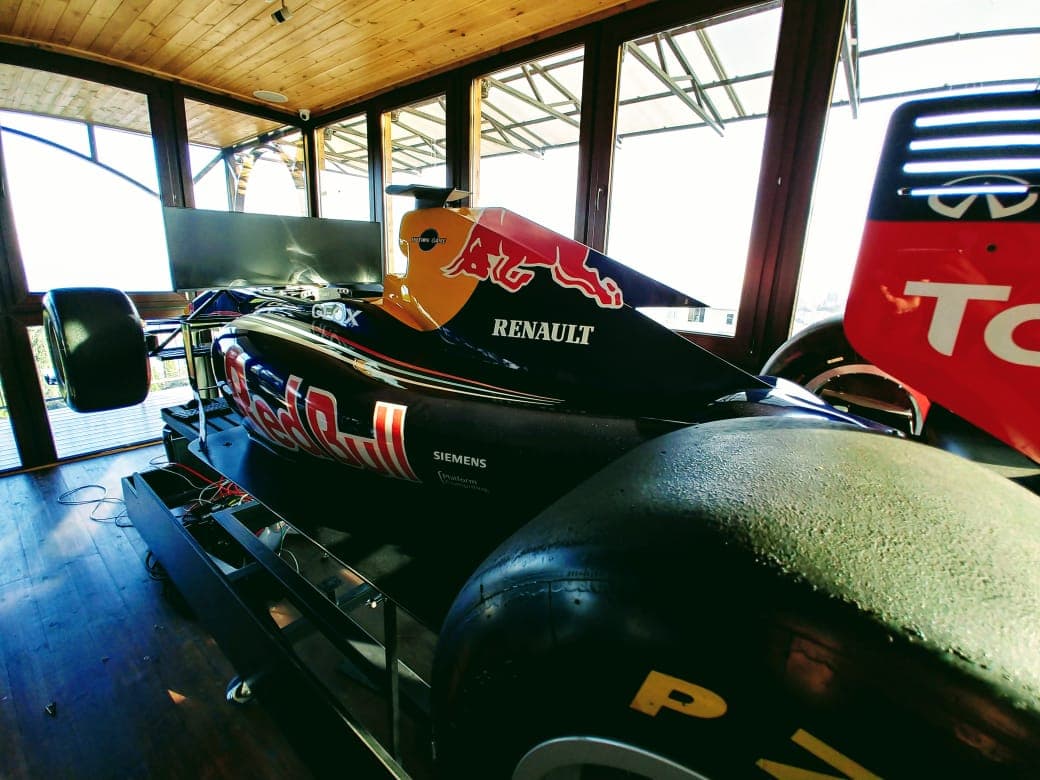
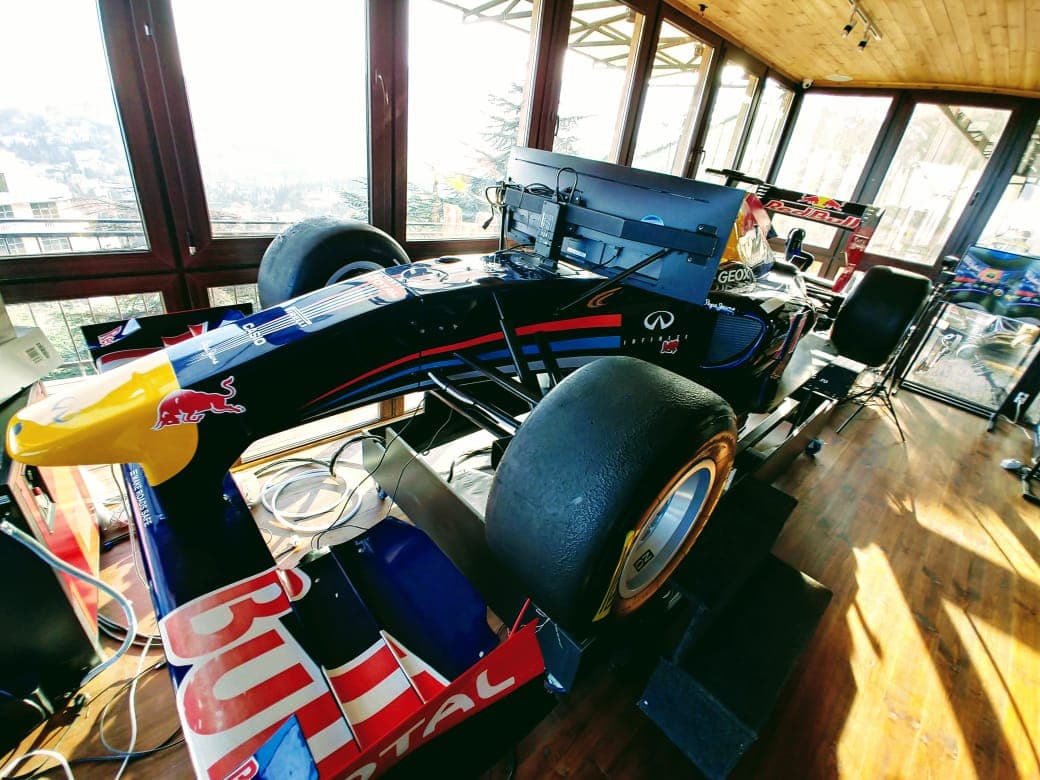
A game platform built as a Red Bull F1 car replica, with an electrically-driven pedal and steering-wheel adjustment system that lets each driver position the controls to their own ergonomic preference — without tools, in seconds, before each session.
Engagement Metrics
F1 replica (Red Bull)
Form
Powered pedal + wheel
Adjustment
Driver-by-driver
Setting
Game / promotional rig
Application
From the project
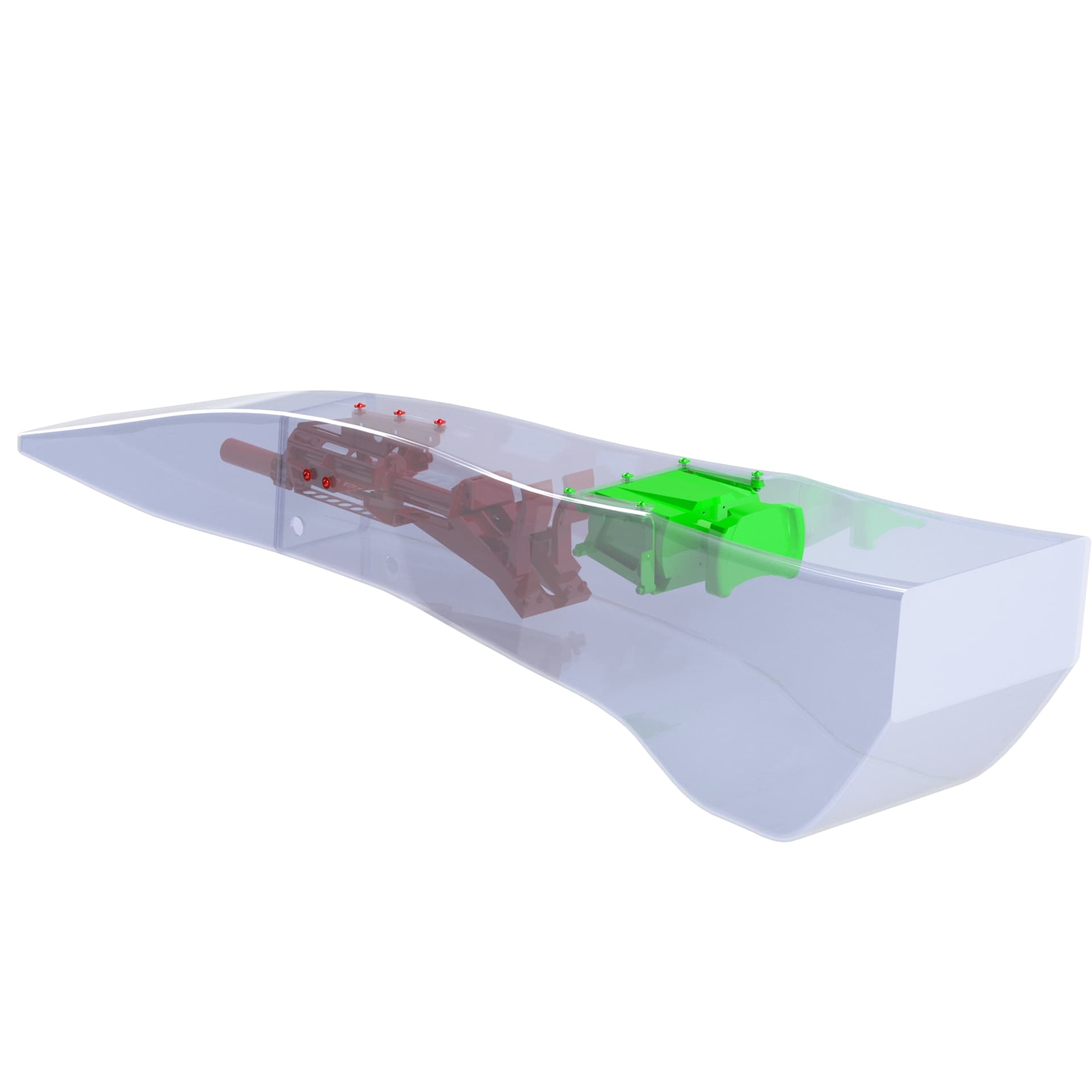
4 imagesBuilt platform — F1 replica form, full Red Bull livery treatment. Cockpit — pedals and steering wheel on independent powered adjustment. Driver-eye view — wheel and pedals reach-tuned to the driver. CAD reference — silhouette and cockpit geometry.
The Challenge
Promotional and experiential game platforms have two failure modes: they look unconvincing as the vehicle they're imitating, or they make every visitor sit in the same fixed cockpit regardless of body size. The first kills the brand experience; the second kills repeat use.
The brief was a Red Bull F1 replica that takes both seriously: a build that reads as the actual car at first glance, and a cockpit that adjusts to each driver in seconds via powered controls — pedals and steering wheel both, no tools, no operator intervention.
What "convincing replica" demands
- *Form accuracy.* Visible silhouette has to read as the F1 car it's modeled on, not a generic racing rig.
- *Cockpit geometry.* The driver sits in a position that feels like an F1 cockpit, not a casual game chair.
- *Brand alignment.* Liveries and surface treatment match the Red Bull identity.
What "adjustable in seconds" demands
- *Powered adjustment.* Each visitor sets pedals and steering wheel without leaving the seat.
- *Repeatable presets.* Returning drivers can recall their preferred geometry.
- *No tools required.* The adjustment cycle is part of the driver's prep, not an operator intervention.
- *Safe operation.* Powered adjustment doesn't pinch, crush, or surprise the driver.
Our Approach
We engineered the platform as a build + cockpit system: the F1 replica form factor on the outside, an electrically-driven pedal-and-wheel adjustment system on the inside.
Form
- *F1 replica silhouette.* Built to read as the Red Bull F1 car at a glance — for promotional and experiential use.
- *Cockpit geometry.* Driver seating angle and reach envelope tuned for the F1 feel.
- *Surface finish.* Brand-aligned livery treatment.
Powered cockpit adjustment
- *Electrically-driven pedals.* Pedal box advances and retracts on electric drive — driver sets the reach without leaving the seat.
- *Electrically-driven steering wheel.* Wheel position adjusts on electric drive — every body size finds a comfortable reach.
- *Driver control.* Adjustment runs from the driver's seat — no operator action required between drivers.
- *Powered, not hand-cranked.* The whole point is to not have the driver wrestle the cockpit between sessions.
Why powered, not manual
A fixed cockpit limits the audience: shorter drivers can't reach the pedals, taller drivers can't sit comfortably. Manual adjustment requires the driver to leave the seat, fumble with hardware, and re-seat. Powered adjustment makes the rig usable for every body size, in seconds, without operator intervention — which is the difference between a rig that sees one user per ten minutes and a rig that sees one user per two.
Results
The platform is built and operating as a promotional F1 game rig: replica form, powered cockpit adjustment for both pedals and steering wheel, usable by every driver without operator assistance between sessions.
Operating profile
- *Reads as the F1 car at a glance.* Form factor and livery match the Red Bull identity.
- *Adjustable in seconds.* Powered controls let each visitor position the cockpit before driving.
- *Operator-free between sessions.* The next driver sits, adjusts, drives. No staff in the loop.
- *Repeat-friendly.* The same visitor returns and re-adjusts; no "sorry, the previous person set it for their height" friction.
Why powered ergonomics matters for promotional rigs
Promotional rigs at events live or die by throughput. Every minute spent fiddling with adjustments between drivers is a minute the rig isn't earning brand impressions. A powered cockpit collapses the between-driver cycle from a multi-minute operator-assisted setup to a 15-second driver-controlled prep.
For a Red Bull-themed activation, that throughput difference is the difference between a rig that processes 30 drivers in an hour and a rig that processes 8. Multiply by event-hours and the engineering investment in powered adjustment pays back in brand impressions per event.