Agritech · Automation · Experimental program
Automatic Fly Feeder — Experimental Stage for a Waste-Processing Investment
Client
Confidential — Agritech Investment
Duration
8 weeks
Year
2022
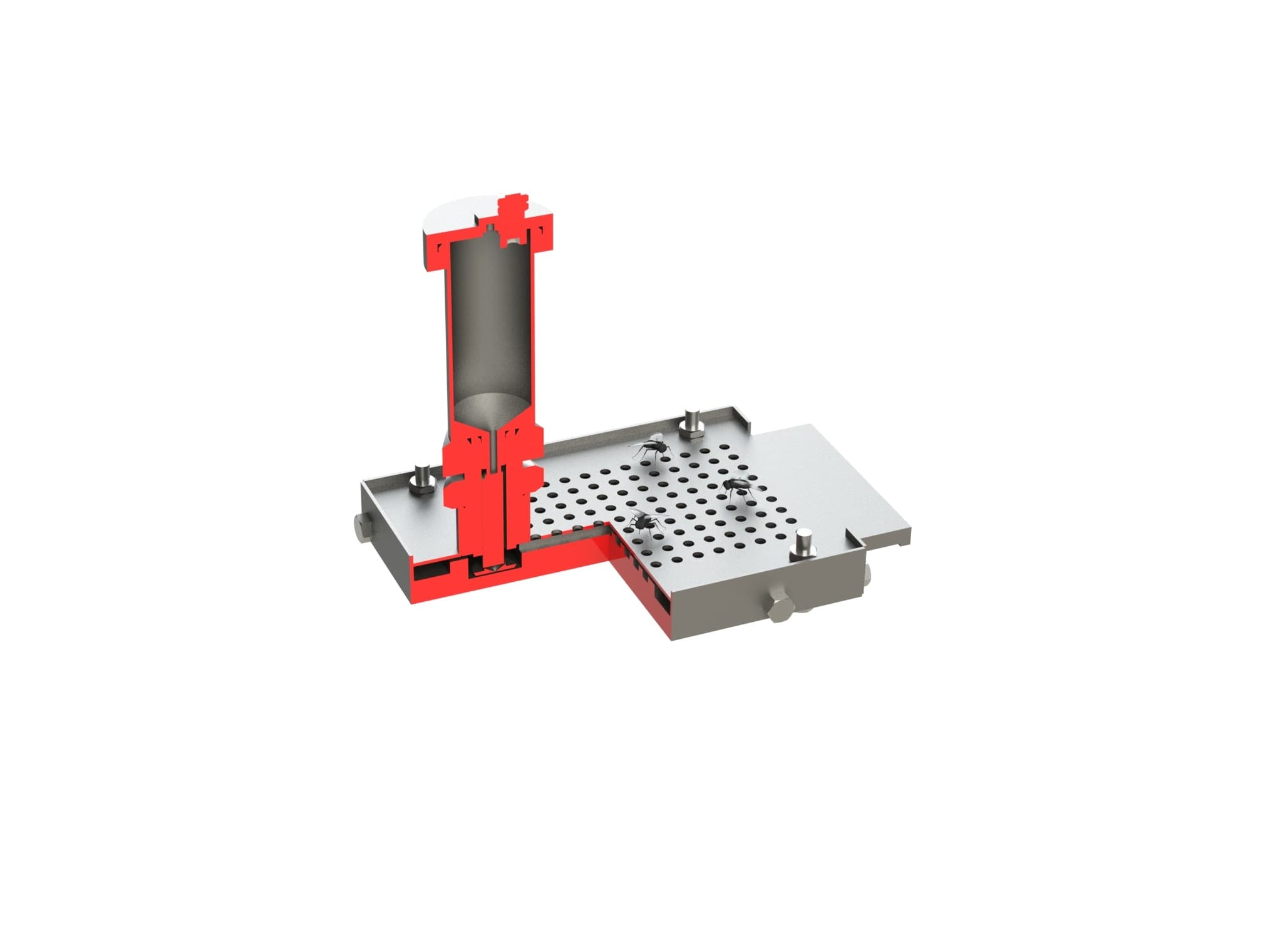
An automated fly-feeding system developed as the experimental engineering stage for an investment program centered on waste-processing plants for poultry and pig farming. The feeder is the upstream input to a biological waste-processing chain where fly larvae convert agricultural waste into usable protein and frass.
Engagement Metrics
Experimental engineering
Stage
Poultry · Pig farming
Target industry
Automated fly feeding
Function
Upstream of waste-processing
Role
From the project
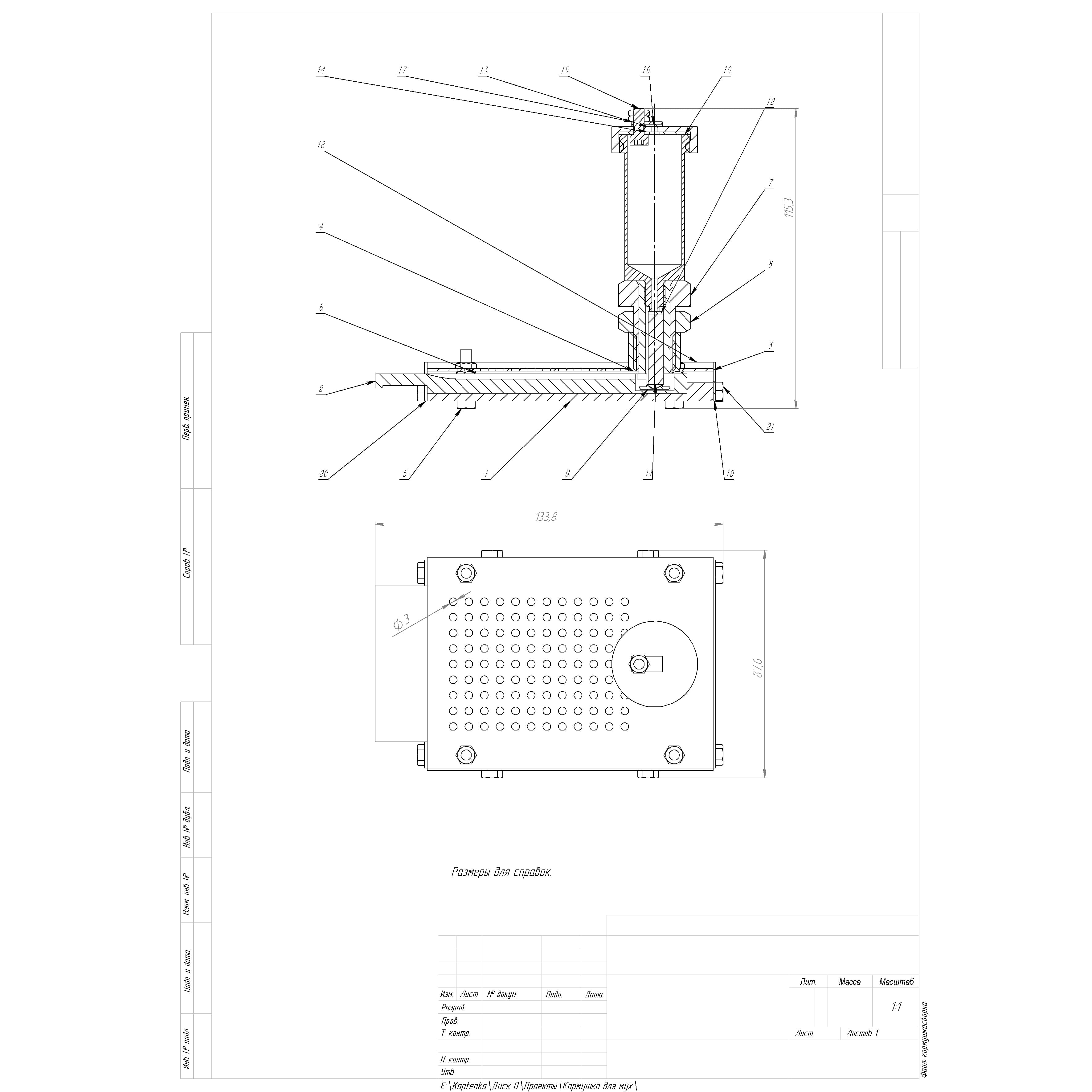
2 imagesBuilt unit — experimental engineering stage for the larger waste-processing program. CAD reference — feed delivery, schedule control, hygiene-aware geometry.
The Challenge
Fly larvae are an underused vector for converting agricultural waste — manure, residual feed, processing waste — into protein-rich biomass and frass fertilizer. The biology works at scale; the engineering is what holds it back. Specifically: feeding adult flies on a controlled schedule, at controlled volume, without operator intervention.
What the investment program needed
- *Experimental engineering, not production design.* Before committing capital to a waste-processing plant series, the investment needed proof that the upstream feeding stage could be automated reliably enough to make a production plant viable.
- *Repeatable feeding cycles.* Adult fly population health depends on consistent food access. Operator-driven feeding doesn't scale to commercial colony sizes.
- *Compatibility with the larger chain.* The feeder is one stage of a longer process (adults → eggs → larvae → biomass → harvest). It has to interface with the rest of the chain without becoming the bottleneck.
Why this is a real engineering problem
Feeding flies isn't "dispense food, walk away." Adult fly populations are sensitive to feed access cadence, food temperature, food contamination, and access geometry. An automated system that gets any of those wrong produces a population crash. An automated system that gets them right enables a production-scale colony — and from there, a waste-processing plant.
Our Approach
We designed and built the feeder as an experimental unit — full engineering scope, prototype-grade build, instrumented for the investment program's evaluation criteria.
Engineering inputs
- *Feed delivery mechanism.* Automated delivery of feed at controlled volume and cadence into the adult fly enclosure.
- *Schedule control.* Cadence programmable for the colony's measured access pattern.
- *Hygiene-aware design.* Surfaces and feed-path geometry compatible with the cleaning regime adult-fly colonies require.
- *Interface with the chain.* Feeder integrates upstream of the egg-collection and larvae-rearing stages.
Why this is staged work
The investment was sequenced: experimental engineering first, production engineering second, plant build third. The feeder belongs to stage one — its job is to demonstrate that the upstream input to a waste-processing plant can be engineered for reliable operation. Production engineering follows once the experimental data justifies the capital commitment.
Results
The feeder was built and operating as the experimental engineering stage of the larger investment program. It demonstrates that automated fly feeding is a tractable engineering problem at the scale a commercial waste-processing plant requires.
What the experimental stage proved
- *Automated feeding cadence works.* Adult colonies fed by the system show comparable health to manually-fed reference colonies.
- *Hygiene regime is compatible.* The feed-delivery geometry holds up under the cleaning regime adult-fly colonies need.
- *Production engineering is justified.* Experimental results support moving to production engineering for the waste-processing plant series.
Why the larger waste-processing program is interesting
Poultry and pig farming generate volumes of manure and residual organic waste that current disposal pathways handle expensively and incompletely. Fly-larvae-based waste processing — black soldier fly is the canonical species — converts that waste stream into two saleable outputs: protein-rich larvae biomass (animal feed) and frass (fertilizer).
The economics flip when waste-disposal cost becomes feedstock cost. The engineering that makes that flip viable at production scale is what this experimental program is building toward — and the automated feeder is the first stage.