Agriculture · Automation · Field-tested
Automatic Piglet Feeding System — Economic Alternative to a Milk Kitchen
Client
Confidential — Agricultural Producer
Duration
12 weeks
Year
2024
Designed and field-tested an automatic piglet feeding system — a heated, in-pen feeder that serves as an economic alternative to a conventional milk kitchen. Approbated on two reproducer programs with 30%–70% survival uplift on weak piglets, plus a sow-turnover acceleration program after day 15.
Engagement Metrics
30%–70%
Weak-piglet survival uplift
36–37°C
Bowl temperature held
16 piglets / 2 nests
Capacity per bucket
Day-15 sow-free
Sow-turnover gain
From the project
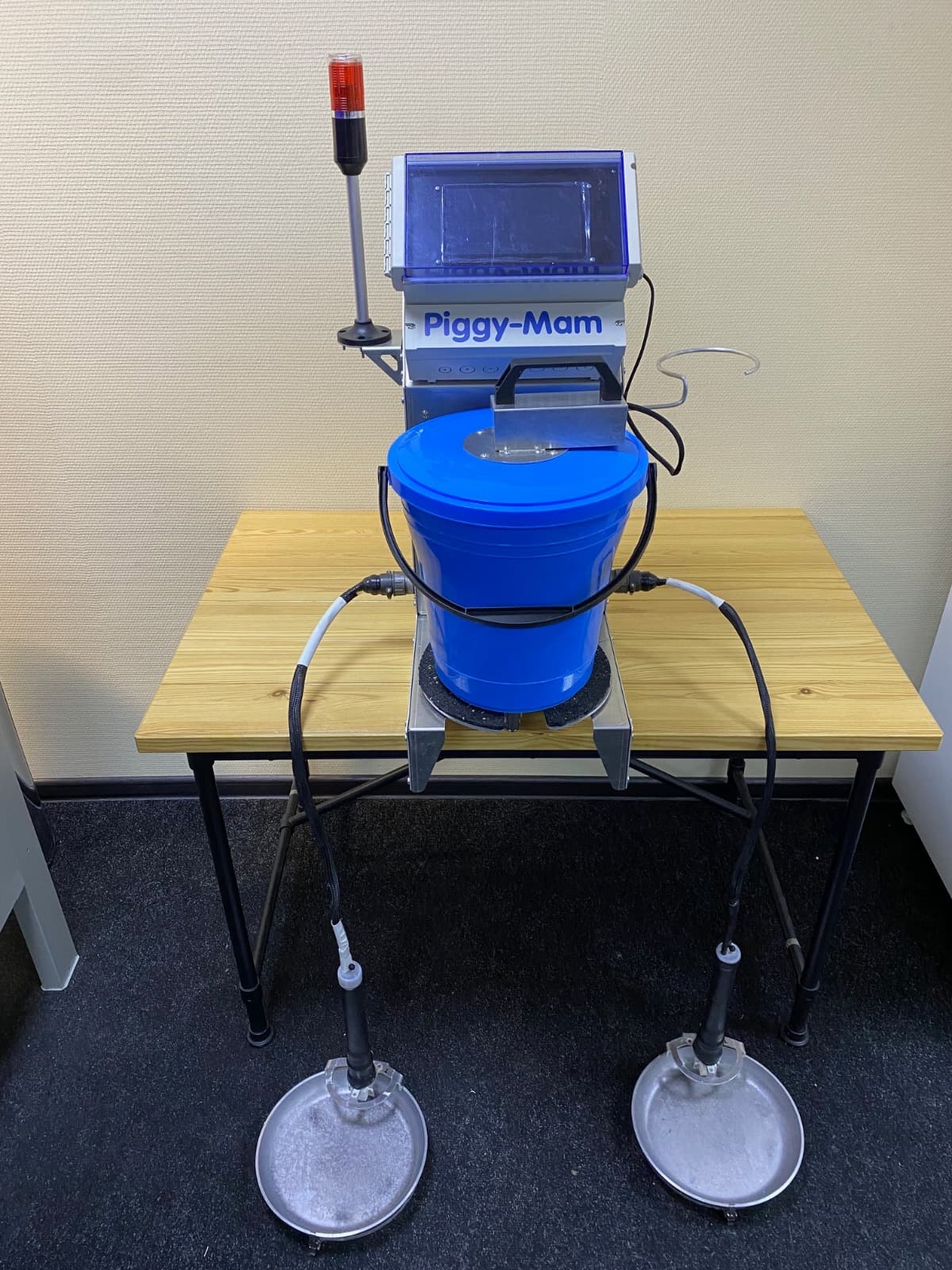
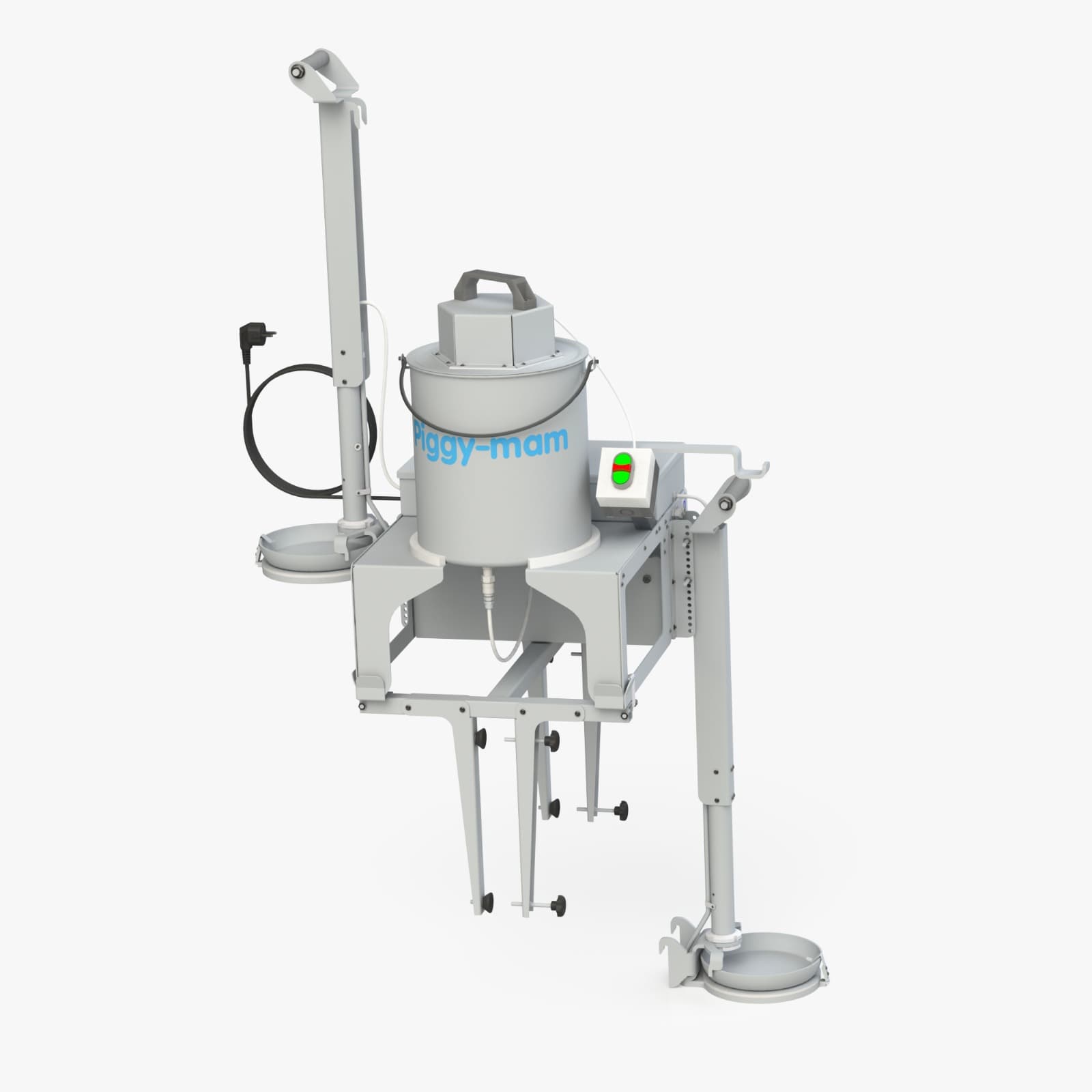
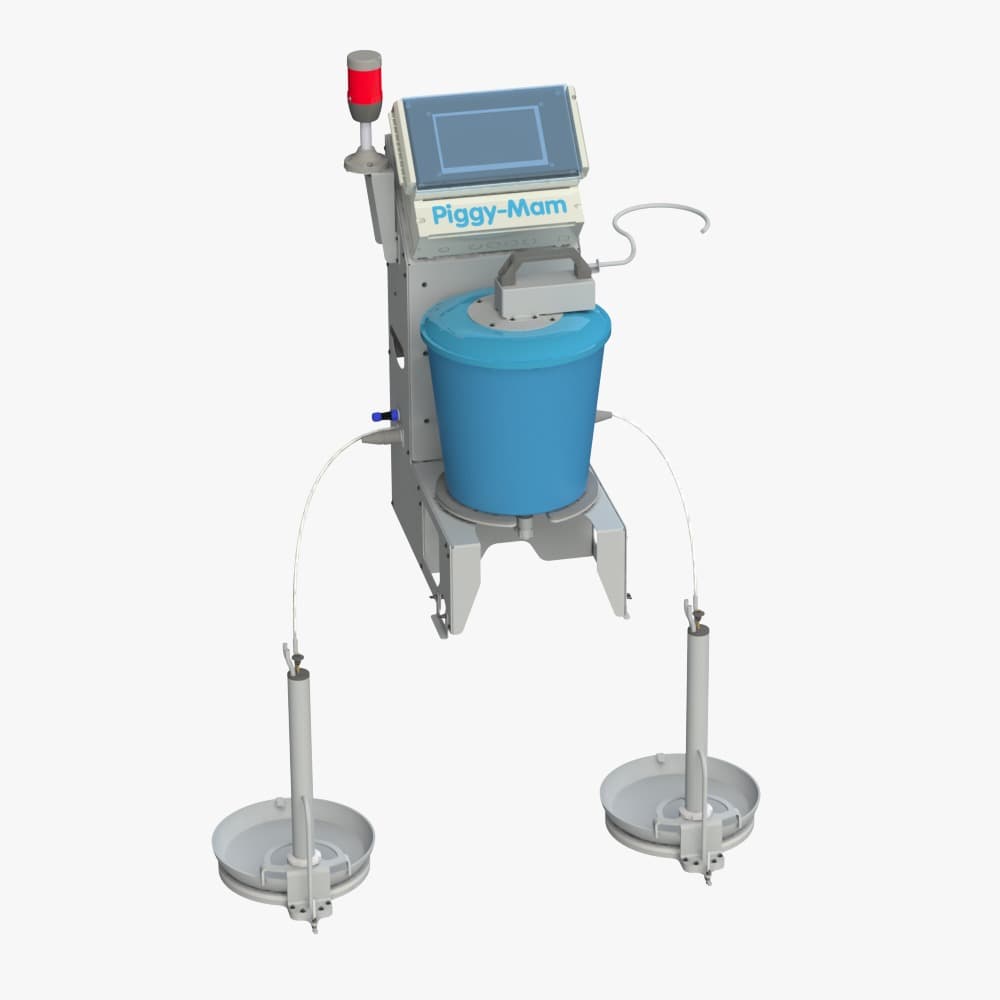
3 imagesFull unit — heated controlled-temperature bowl and feed reservoir. In use — bowl held at 36–37°C drives intake in weak piglets. Detail — temperature control mounted directly to the bowl.
Walkthrough
Field footageThe Challenge
Conventional milk kitchens are capital-intensive: dedicated room, dedicated handling, dedicated cleaning regime. They deliver outcomes, but the per-litter economics only work at large herd sizes — and even then, the workflow runs in parallel to the farrowing nest rather than inside it.
The operating reality producers wanted was different. They needed the survival outcome of a milk kitchen without the capital cost — and a system that worked *inside* the farrowing nest, on the sow's schedule, rather than as a separate workstream that demanded its own staff time.
The constraints we engineered against
- Mixture temperature has to hold at 36–37°C continuously — piglets refuse cold or even lukewarm feed, and weak piglets refuse it twice as fast.
- Cluster immunity from the sow's first 12 hours of colostrum must be preserved — anything we deployed had to *supplement*, not replace, original sow feeding in that window.
- The unit lives inside a farrowing nest. It cannot become a slip hazard, a crush risk, or a cleaning blocker.
- Capital cost per nest has to undercut a proportional share of a milk kitchen, or the program doesn't ship.
Our Approach
We engineered an in-nest feeder with closed-loop heated bowl control so the liquid mixture — milk, yogurt, or porridge — stays at 36–37°C throughout the day. The unit is placed two-per-pair-of-nests, with each bucket sized to serve 16 weak piglets selected from the farrowing.
What we built
- *Mechanical:* food-safe bowl with integrated heating, gravity-fed reservoir, and an in-pen mount that survives sow weight and biting.
- *Controls:* heated-bowl regulation that holds the eating-temperature band without overshooting (which damages probiotic mixtures) or undershooting (which kills intake).
- *Operating protocol:* weak-piglet selection rule (under 800g from any farrowing), nest combination procedure, and the day-by-day feeding schedule the farm staff actually run.
How it was approbated
The system did not replace original sow colostrum during the first 12 hours of life — cluster immunity stays preserved. After day 15, orphan piglets can be raised entirely on the feeder without a stepmother sow, which materially accelerates sow turnover compared to the conventional stepmother approach.
We ran it on real farrowings, in real nests, across two reproducer programs before signing off on the production package.
Results
Both reproducer programs reported the outcomes the engineering targeted, and the system is in active production use.
Weak-piglet program
Piglets under 800g, selected from the entire farrowing and combined into supplemented nests with extra feeders, achieved at least 30% additional survival versus the same nest without the system — and up to 70% additional survival on the better-managed farrowings. The heated bowl is the load-bearing variable: weak piglets eat at 36–37°C; they don't eat reliably at 30°C.
Sow-turnover acceleration program
After the 15th day of life, orphan piglets were raised entirely on the feeder. The reproducer no longer needed a stepmother sow for those litters. Sow turnover at the farm-cycle level increased meaningfully versus the conventional stepmother-based workflow — every freed-up sow returns to the breeding cycle that much sooner.
Design constraints that shaped the system
Engineering inputs
- Heated bowl that holds 36–37°C continuously — measured at the eating surface, not at the heating element.
- Two-feeders-per-two-nests density target so the program can deploy without re-laying the farrowing room.
- Sixteen-piglet capacity per bucket, sized from real weak-piglet counts on the target reproducer farms.
- Food-safe surfaces compatible with milk, yogurt, and porridge mixtures — and with the disinfectant regimes the farm already runs.
Operating inputs
- Original-sow colostrum during the first 12 hours of life is non-negotiable for cluster immunity. The feeder supplements; it does not replace.
- Weak-piglet identification is by weight at farrowing (under 800g) — operator-friendly, no instrumentation required.
- After day 15, orphan litters move entirely onto the feeder, freeing the stepmother sow.
Why this matters at the producer level
A milk kitchen is a capital line item. The feeder is a per-nest line item that doesn't require a new room, a new staff role, or a new disinfectant regime. The economics work at smaller herd sizes than a milk kitchen can serve, and the workflow runs inside the farrowing room rather than next to it.
For producers running weak-piglet recovery as a strategic priority — and for producers running aggressive sow-turnover programs — the system gives a measurable result on both axes without the capital investment of a conventional milk kitchen.